Support
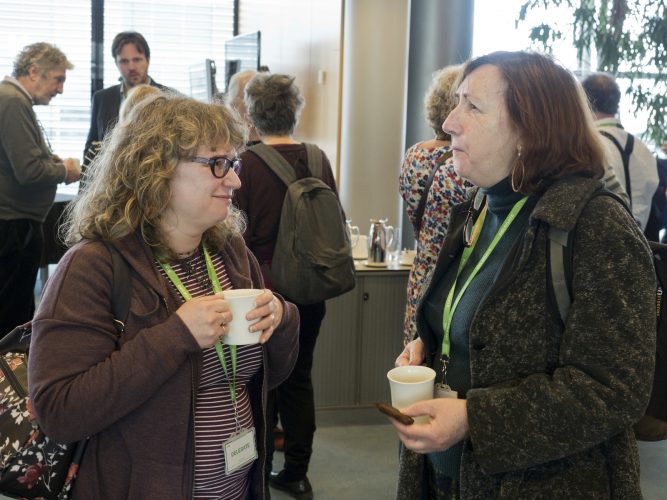
Receiving a diagnosis of PPA can be isolating and can have an impact on family members, friends and carers. It is really important that the right support is available, not only for the person with PPA, but also for their loved ones. Our PPA Support Group meetings can be a good place to start.
Support groups are a great way of accessing help, information, advice and support in a space of mutual respect and understanding. They provide opportunities to speak to professionals and ask questions, as well as for connecting with others in similar situations.
People living with PPA and their friends and family are welcome to join our London support group meetings, our virtual meetings or to see what regional support groups might be available. Please visit our Meetings page for more details.
It is important to note that, as PPA is rare, many healthcare services do not have much experience supporting people with PPA. However, you may still find it helpful to seek support from a variety of health and social care professionals such as GPs and nurses, community mental health teams and social workers.
Strategies for managing PPA
There are certain strategies that people have found useful to help them manage the symptoms of PPA.
We understand that everyone affected by PPA experiences it differently and what works for some may not work for others. The tools and strategies suggested below have been shared by PPA Support Group members and other relevant organisations.
Speech and language therapy
Speech and language therapy can help people living with PPA and their families to better manage their communication difficulties. Speech and language therapy can help people use electronic devices and other strategies to help ‘bypass’ their speech difficulty.
As well as helping the person with PPA, speech and language therapy can provide valuable guidance for friends and families, helping them to communicate more effectively with the person with PPA.
Assessment of swallowing and diet is another important role for speech and language therapists – swallowing can become affected in the later stages of PPA.
For more information about communication devices, speech and language therapy, and other coping strategies please visit our FAQs section.
Non-verbal activities
We have often seen people with PPA enjoying tasks and activities that rely less on language. Reading books can become difficult in all forms of PPA, but some people still enjoy listening to audiobooks and watching television. Physical activities that do not require language such as yoga, pilates, tai-chi and going for walks can be really enjoyable for some people.
Many people with PPA enjoy listening to music or participating in musical activities. Sometimes, people with the nonfluent variant of PPA (PNFA) can sing better than they can speak, meaning that choirs and singing groups can be helpful for some people. In people with semantic dementia (SD), non-verbal puzzles like Sudoku and jigsaw puzzles are often challenging but enjoyable distractions.
However, it is important to note that not everyone living with PPA will be able to engage with, or enjoy, these activities all of the time.
Behavioural strategies
Changes in behaviour and personality can also emerge in the different forms of PPA. We have provided some information on management strategies for behavioural symptoms on our Living with FTD page.
Treatment
Unfortunately, there are no treatments available that will prevent any forms of PPA or slow its progression. Research is ongoing and we hope that clinical trials of new drugs will start soon.
Treatment therefore focuses on helping people to manage their symptoms and on supporting them and those around them.
However, there are certain cases where people living with PPA might find medical treatments helpful. For instance, if a person’s PPA is caused by the same proteins that cause typical Alzheimer’s disease – as is commonly the case in logopenic aphasia (LPA) -then they may benefit from the medicines prescribed to help manage symptoms in Alzheimer’s disease. This is a class of drugs called cholinesterase inhibitors.
Understandably, people living with any form of PPA can become depressed or anxious due to the problems with speech and language. These are treatable problems, so it is important that they are detected and managed effectively, including referral to a mental health professional where needed.
Please note that you should always speak to your GP or healthcare professional before taking any medical treatment.