Support at different stages

The diagnosis of a rare dementia can be a traumatic time. It may have taken a long time to reach the diagnosis and will likely have involved multiple and repeated investigations across a range of health professionals. For some people, receiving a diagnosis is a relief after months (or longer) of uncertainty, for others it can be unexpected and a shock.
There are many different types of dementia, and it can take a long time (sometimes up to a year or more) for test results to indicate the type of dementia a person has. Usually, this is because of the need to look at changes over time in the way that symptoms develop, and brain structures or connections alter. It can also take a long time to rule out other potential causes of the symptoms.
Rare dementia diagnoses are proportionately more likely to be made in people whose symptoms begin before the age of 65. However, some conditions, such as Lewy body dementia, are more common in older people.
Diagnoses of dementia are classified into 3 categories:
Possible: the diagnosis of a ‘possible’ variant of dementia is given when there are signs of cognitive decline but there are possible reasons other than dementia as the cause. When symptoms are not memory led, and have a visual, language or behavioural focus, this category of diagnosis allows for additional further investigations to be completed.
Probable: the diagnosis of a ‘probable’ variant of dementia is given when other causes have largely been ruled out and the symptoms and their impact on daily living activities are continuing. This is the maximum level of diagnostic certainty possible without examining cells from either a biopsy or autopsy.
Definite: a ‘definite’ diagnosis of dementia is, for most people, only confirmed after death, and if the brain of the person with the diagnosis is examined posthumously by a medical expert. The disease pathology can be seen under a microscope and the diagnosis can be confirmed.
In recent years, a number of new brain scans, tests of spinal fluid and blood tests have been developed to look for the typical characteristics of different underlying diseases. Where possible, these can allow for a definite diagnosis of a particular type of dementia while the person is still alive. However, some of these are still being developed, or are only available in specialist centres or as part of research studies.
It is not uncommon for a diagnosis to change over time, as symptoms develop and test results provide a clearer picture of the underlying causes. However, in some cases, people are initially referred to medical professionals who are not necessarily the most able to recognise dementia. For example, people with posterior cortical atrophy (PCA) may be referred to eye specialists and ophthalmologists in the belief that there is something wrong with their eyesight. While these specialists can play a helpful part in the process of ruling out other causes or treatable causes of the symptoms, people often feel that they have ‘wasted’ a lot of time on appointments before the realisation by medical teams that they have a ‘brain sight’ problem, not an ‘eyesight’ one. This sense of having ‘wasted’ or ‘lost’ time often complicates the way we feel about and adjust to the diagnosis of a rare dementia.
At Rare Dementia Support (RDS), we recognise the additional challenges that a rare dementia diagnosis brings. We are working with allied health care professionals to help increase the awareness and understanding of rare dementias and to enable colleagues in these fields to recognise rare types of dementia and make appropriate referrals. Please feel free to signpost other professionals you might be referred to, to RDS, where we will be pleased to provide them with relevant professional advice and information. In addition, the Direct Support Team can help members get the most out of appointments with other health professionals, by providing the relevant information and a guideline for the questions that need to be asked. An example of the resources that might be helpful to share is The Many Faces of Dementia online course, as well as the additional educational resources.
Rare Dementia Support seeks to provide the support that people need, from assistance with getting a diagnosis, accepting that diagnosis, living with the symptoms of the early and middle stages and through to the later stages of dementia. RDS also provides support for bereaved carers in bespoke groups that are facilitated by members of the RDS team.
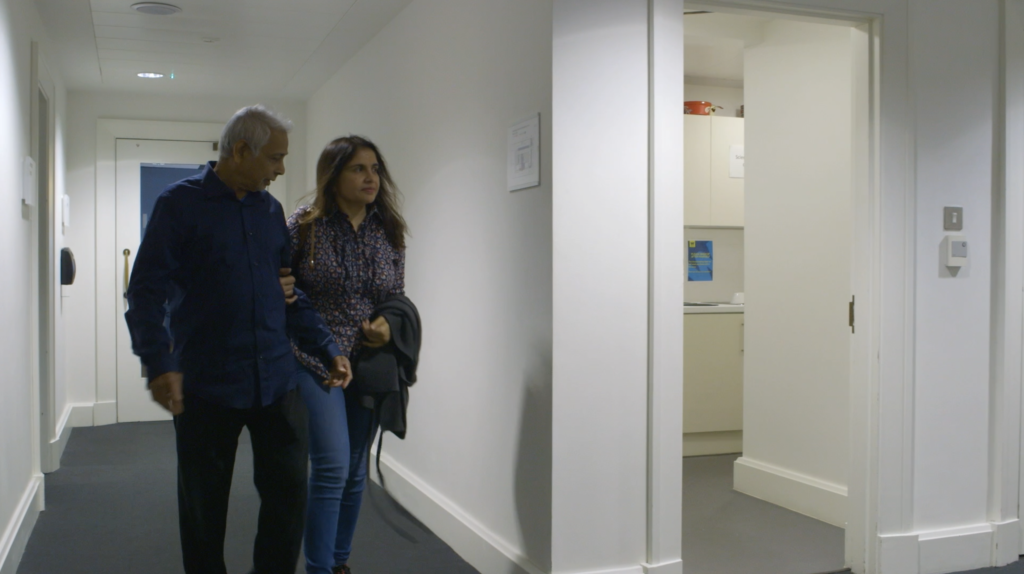
RDS members come to us at various time points in their journey with dementia. Sometimes it is the concern over symptoms that lead people to our website and services, before any diagnosis of dementia has been made. It may be that tests have been inconclusive or there is some uncertainty over a given diagnosis. We can help navigate the process of diagnosis, and assist with referrals for second opinions, where appropriate and helpful.
Please get in touch with the RDS Direct Support Team via contact@raredementiasupport.org if you would like information on how to access a specialist clinic close to where you live, as we can help signpost to a number of specialist clinics around the UK. It is important to note that referrals to these specialist cognitive neurology clinics will require a referral from a GP or the local memory service.
The Cognitive Disorders Clinic at The National Hospital for Neurology and Neurosurgery is a tertiary referral centre (or specialist centre), and can take primary (e.g. from a GP), secondary (e.g. from a memory clinic) and tertiary (e.g. from another neurologist) referrals. It is the clinic to which the RDS service has affiliation, but there are similar specialist clinics across the UK which provide a comparable service.
People do have the right to request a referral to see a neurologist somewhere other than their local hospital. Requesting a second opinion is also possible where there is a justifiable reason for this. Details of how referrals to the Cognitive Disorders Clinic in Queen Square can be made, are available on the University College London Hospitals website. Many people find it helpful to have a telephone or video call conversation with the Direct Support Team in advance of initiating a referral to the clinic.
Once a referral has been received, it will be triaged to assess whether an appointment is appropriate. If it is appropriate , an appointment will be offered. Waiting times for appointments at the Cognitive Disorders Clinic, and other similar clinics, are variable according to the demand on the service at the time of referral.
Once an appointment is scheduled at the Cognitive Disorders Clinic, a neurologist will conduct several assessments to determine whether the symptoms being experienced are caused by a rare dementia or something else.
The neurologist will listen to a detailed history of what’s been happening, asking questions about the things that have become difficult, and for how long these difficulties have been present. Ideally, they will also ask the same questions of somebody who knows the person who has been referred and who can accompany them to that first appointment.
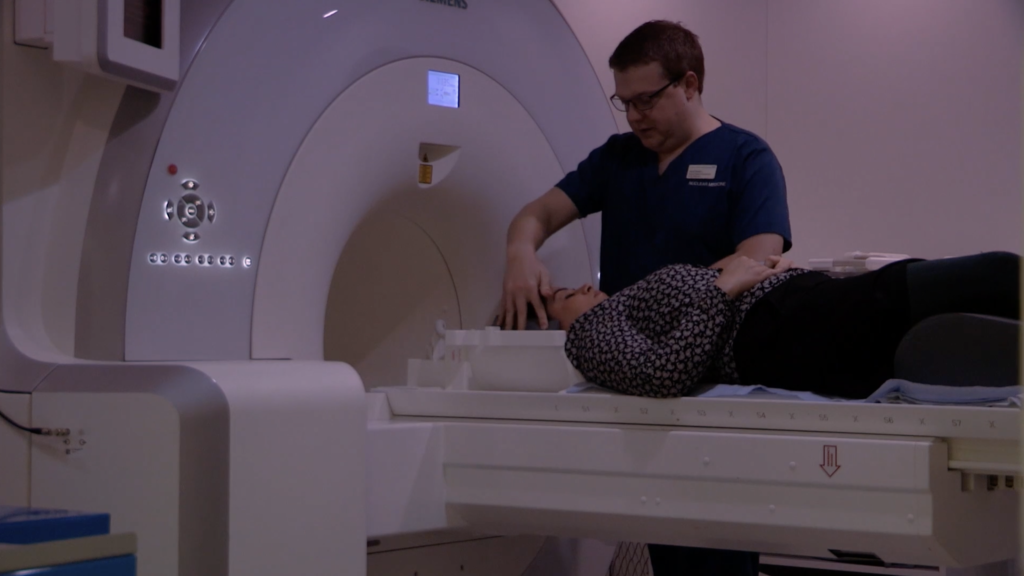
Various investigations are likely to be requested. A magnetic resonance imaging (MRI) brain scan allows the medical team to see a picture of what’s happening within the brain. Cognitive testing with a neuropsychologist will help the team to understand more about how particular skills are affected. This is often a lengthy assessment, taking 2-3 hours, but it’s very important to see people’s strengths and weaknesses across different types of thinking skills in order to build a picture about which parts of the brain are impacted.
Sometimes, the neurologist might request that a lumbar puncture or ‘spinal tap’ procedure is performed. This can be helpful in identifying whether the proteins associated with particular diseases are circulating in the cerebrospinal fluid. It is important to know which proteins are present to help achieve an accurate diagnosis. It also helps determine which treatments may be the most beneficial. For instance, some medications that can help to manage symptoms in Alzheimer’s disease are not suitable for frontotemporal dementia and may cause side effects such as agitation.


There is often confusion around the terms we use to describe dementia. Dementia is an umbrella term used to describe progressive changes in cognitive abilities. There are hundreds of types of dementia, with Alzheimer’s disease being the most common.
Rare Dementia Support is working to improve understanding of and support for people living with 7 rare dementia diagnoses.
An accurate diagnosis allows for disease-specific support. It means that people are able to better understand how their disease might progress, what symptoms to expect and how best to manage these symptoms. An accurate diagnosis also helps people with planning for the future.
It may be that some medical professionals have never met anyone with a particular rare type of dementia before. Around 30% of people living with a rare or young onset dementia initially receive an incorrect diagnosis. As a result, people can sometimes be given misleading or inaccurate information about their diagnosis. However, as the rarer types of dementia progress, there is sometimes a natural re-assessment of the symptoms and a revision of the ‘possible’ diagnosis that was initially made. Sometimes people express a feeling of having been ‘mis-diagnosed’ when the name of their diagnosis changes. This may be the case in some situations, for example where a dementia diagnosis was mistaken or overlooked as an eyesight or language problem. However, a change in the working diagnosis does not necessarily mean that a misdiagnosis has occurred, rather that as more information comes to light, the medical teams are better able to come to more accurate decisions about a diagnosis.
It is important that healthcare professionals are better informed about rare forms of dementia and equipped to recognise the symptoms, adapt their approaches accordingly and refer people on for specialist assessments where appropriate. Rare Dementia Support is working to support and enable healthcare professionals to better understand these forms of dementia, and there are some useful resources available on our Learning page.
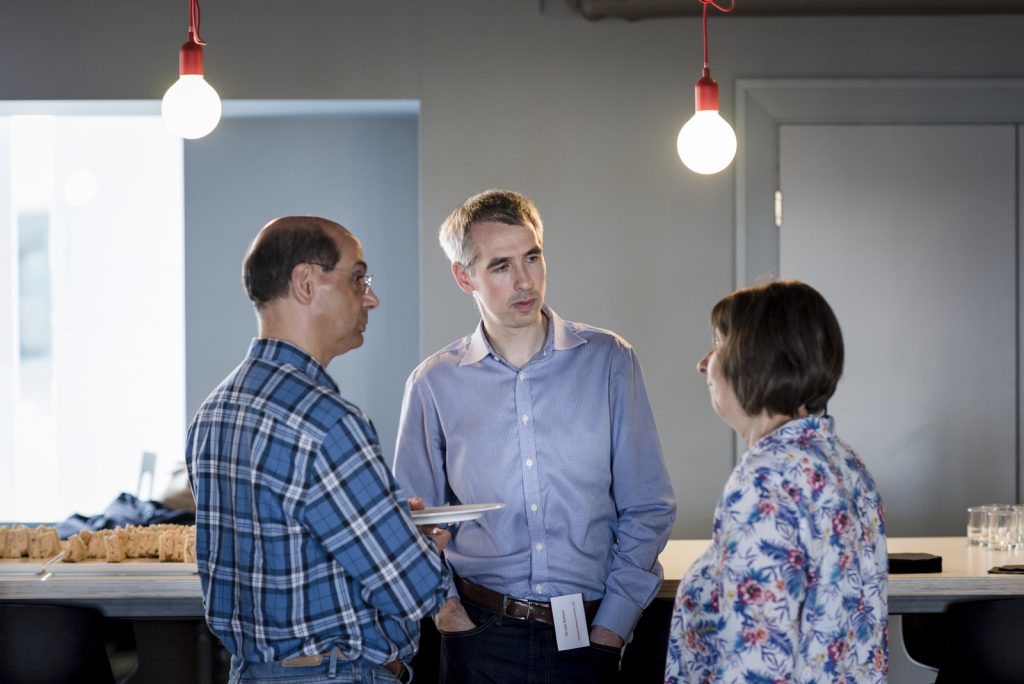

The diagnosis of a rare dementia can bring with it a set of unique and complex challenges. RDS is available to support people along the journey to diagnosis and with the ongoing needs that follow.
While some people find good diagnosis specific and age relevant support following their diagnosis, many people find that local health, social and voluntary services do not cater adequately for their individual needs. More specifically, they may find that established dementia support groups and services are not particularly relevant to their situation. Members of these groups can often be significantly different to them in terms of age, life situation and symptoms.
There can be a widespread lack of understanding and a shortage of dedicated resources to support people living with a rare dementia. RDS is working together with people whose lives are affected by rare dementias, to provide social, emotional and practical support alongside research and training about rare dementias. By increasing awareness about these conditions, we hope to empower communities to better support everyone affected by a rare dementia diagnosis.
It is important that people living with rare dementias have a good understanding of the disease and what this will mean. The Direct Support Team (DST) at RDS can help to explain how living with a rare dementia might impact on the daily lives of the people affected. They can help with guidance on planning for the future, making adaptations and what local support will be helpful. RDS can work in partnership with local support services to aid understanding and ensure the support that is offered will be appropriate and meet people’s needs. There are also a variety of resources, factsheets and recordings to aid understanding for people living with a diagnosis, their family, friends and health professionals, available on our Learning page.
Post-diagnostic follow-up and care can be provided by a variety of professionals. Some people will remain under review by a neurology team, others will be under the care of a psychiatry team or a Community Mental Health Team (CMHT), whilst others will have their ongoing care coordinated by their GP. It is important to know who your care team is and to know who to contact within that team if you have any questions. Some people living with dementia navigate their appointments and support options themselves, or with the help of family and friends. Others need or choose to have the support of an ‘advocate’ appointed for them by the local council. An advocate can help people to understand their care options and the processes for support that are available. They can talk about how a person feels about their care, help them to make or challenge decisions about their care, and represent their rights. More information is available on the NHS website.
RDS members may find it helpful to access post-diagnostic information sessions for further information about post-diagnostic support. If you are interested in attending these sessions please contact the Direct Support Team by emailing contact@raredementiasupport.org.
RDS facilitates a wide range of groups, both in person and online, in London and across the UK for people affected by a rare dementia. Some of these meetings are provided for the person living with dementia, others are for their carers, and some meetings provide a space for both the person living with dementia and their carers to attend together. Find out more information on our large group meetings and our small group meetings.
Signing up to become a member of RDS is free of charge. Everybody is able to view our website and the information it contains, but by becoming a member you can access our direct support services, receive our information and updates, and join in our in-person and online support group meetings. If you would like to register as an RDS member, please fill out this online form.
A holistic, person-centred approach to support is needed to ensure that needs are best met. This often means working with different organisations including local services such as the Alzheimer’s Society, Dementia UK, carers organisations, Age UK and local health and social care providers. We recommend contacting us for an initial conversation as soon as possible after diagnosis so we can work with you to agree the best ways that RDS can provide support.
Rare Dementia Support works hard to improve the lives of people living with rare dementia diagnoses. We provide support and signposting information to help people living with and affected by these conditions, but we are not able to provide a helpline or an emergency/crisis support service. We advise our members contact the relevant emergency service in case of immediate need by dialing 999 or 111.
The following ‘Helpline’ services may be appropriate for other needs:
Samaritans 24 Hour Helpline (free from any phone): 116 123 or email jo@samaritans.org for a reply within 24 hours. You can also call the Samaritans Welsh Language Line on 0808 164 0123, 7pm-11pm every day
Alzheimer’s Society Helpline: 0330 333 0804 – open 8am-10pm every day (closed 25th December)
Dementia UK Helpline: 0800 888 6678 – open Monday to Friday, 9am-9pm, and Saturday and Sunday 9am-5pm (closed 25th December)
MIND’s website also has information on additional helplines and support services

As a rare dementia progresses towards the later stages, there are many symptoms which overlap with more typical dementia. The need for support might change, but it continues nonetheless. RDS facilitates groups for people who are preparing for and going through the later stages of dementia. By nature, these groups tend to be made up of carers, family and friends of the person who has the diagnosis, who may find the ongoing peer support and access to professional guidance helpful.
The later stage carers sessions are designed for carers of people living with a rare dementia who are in the later stages. It is made up of 8 online sessions, each lasting 1.5 hours, and is co-facilitated by professionals with expertise relevant to the later stages of dementia. Many of our members have found this a helpful programme to attend, and one that enables a clearer understanding about current and likely future needs.
Support continues for as long as our members feel it is beneficial, with our bereaved carers groups taking place online every month. RDS members are welcome to attend as a one-off following the death of the person they have known, loved or cared for, or to attend ongoing sessions depending on their preference.
As long as our members are benefitting from our services they are welcome to continue being a part of our community and we are continually looking for ways to enhance and extend the service we can provide to our members.