Wellbeing and empowerment
Become a member

Every person whose life is affected by dementia has their own life story, relationships, personal preferences and interests. These are all important aspects of someone’s wellbeing, which is impacted by a complex combination of physical, mental, emotional and social health factors. Empowerment refers to the process of feeling in control over the decisions and actions that are impacting our lives. It is important that people affected by dementia are empowered to make their own choices where possible, engage in activities that they enjoy, spend time with people who are important to them, and that they feel safe and supported. There are many different ways to approach wellbeing and empowerment in dementia. What works best for one person living with dementia will be different to what works for someone else, and this will also change over time.

Choice and control

When our lives are affected by dementia, it can feel as if a lot is out of our control. Taking control over the things we can, big or small, can contribute to a sense of empowerment. Making plans for the future can help people affected by dementia feel that they are more able to focus on living in the present.

Choice and control can include choosing people that we trust to make decisions on our behalf by having a lasting power of attorney in place, letting people know what our preferences are by putting together an advance statement, and completing the Alzheimer’s Society This is me document or a similar equivalent. Some people who are living with dementia opt to have an advocate appointed for them by the local authority/council. An advocate can provide particular help for people living alone with dementia, to assist with understanding their care and support process. They can talk to a person about how they feel about your care, help them to make or challenge decisions about their care, and stand up for their rights and entitlements. More information is available on the NHS website.

Speaking to other people about the decisions being made is generally a good idea, before completing and signing any documents. Family, friends and healthcare professionals are well placed for these discussions, and the Direct Support Team at RDS can also provide guidance. Email contact@raredementiasupport.org to discuss this further.

Lasting power of attorney (LPA)

A lasting power of attorney (LPA) is a legal document which allows a person (known as the donor) to appoint one or more people (known as attorneys) to help them make decisions about issues related either to their property and financial affairs or about issues concerning their health and welfare. Being a ‘lasting’ power enables it to continue when the donor loses capacity to make decisions for themselves. Lasting power of attorney forms are available online and unless there are some complicated aspects to be included, you do not generally need a solicitor to complete them. They cost less than £100 to process and may be free or lower cost if the person is in receipt of particular means-tested benefits.

See the RDS website page on rights and entitlements for more information about LPAs.

Advance statement

An advance statement allows a person to record their wishes, feelings, beliefs and values. It helps make sure that if in the future someone cannot make or communicate their preferences, their wishes are known and can be followed where possible. It can include any information relevant to health or care. This document is not legally binding, but enables people to share information about their wishes, ideals and preferences.

See the RDS website page on rights and entitlements for more information about advance statements.

‘This is me’

This is me is an Alzheimer’s Society resource that can be used to record details about a person living with dementia who can’t easily share that information about themselves. It can include information on someone’s cultural and family background, important events, people and places, and their usual preferences and routines. It is used to help health and social care professionals better understand who the person living with dementia is, which can help them deliver care that is tailored to their needs.

A copy of This is me is available to view or download on the Alzheimer’s Society website. Some people choose to complete all the sections in one go, other people opt to focus on just the relevant sections at the time of completing. It is a document which can be returned to and updated over time. Some people incorporate it within their advance statement, and add additional sections relevant to their diagnosis specific needs.

Relationships​

Everyone who knows and cares about a person who has been diagnosed with dementia will be adjusting to changes of one sort or another. So too will the person who is living with the diagnosis. Everyone will be adjusting in their own way to what the diagnosis of dementia means to them and how it might impact their relationships.

Some people can feel isolated when they are diagnosed with dementia. It can help to talk to other people, be that friends, family, professionals, or other people living with the same diagnosis. The Direct Support Team at RDS are available for these types of conversations, and can also connect people with support groups with other people with similar diagnoses and in a similar situation. Please email contact@raredementiasupport.org for more information. 

Please see the RDS website pages on adapting emotionally and personal relationships for further information and guidance.

Engagement​ – how we use our time

Having to stop or reduce work because someone is living with dementia can mean there is more time than previously to fill. It can be helpful to think about other activities that would be good to try, and to seek out activities which motivate and involve us, and which we feel connected to. Living with dementia might also require us to ask for some additional support for the activities that we would like to do, or need to do, but find difficult. Acknowledging and accepting that we might need help or support can be a difficult process. Many people living with dementia have shared that having the right level of support is important. Receiving enough support to feel enabled and capable, but not so much that it feels as if people are taking over completely, can help to increase independence and empower us to keep doing activities that we enjoy. ​A sense of accomplishment is important for everyone– whether giving or receiving support that is required along the way.
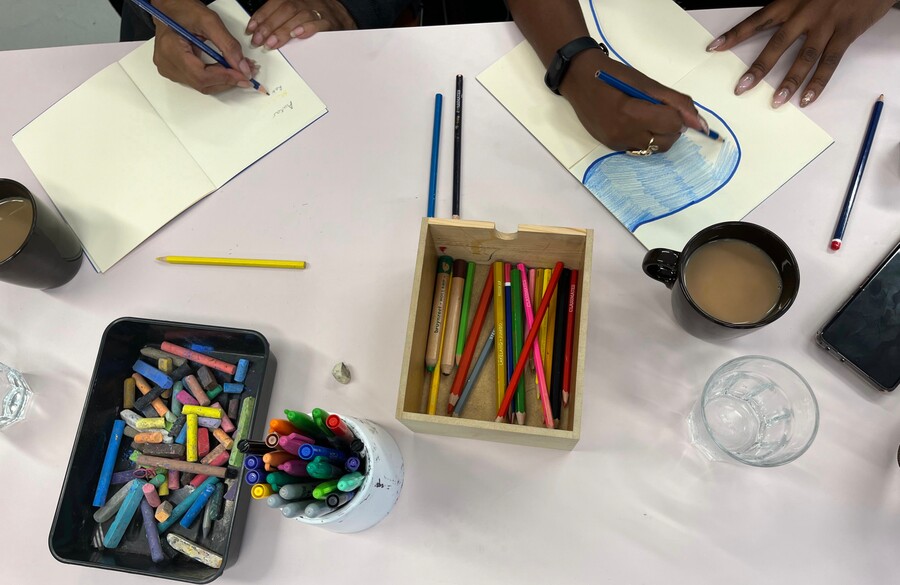
Examples of ways that dementia might impact engagement

“My sister loves art, and is brilliant at it, but she didn’t really want to do any creative activities at home on her own. She found it hard to think of activities to do, to find the motivation to start them, and she was very self-critical about the change in her abilities due to her dementia. We tried a local art group together through AgeUK – they were so kind and supportive, and there was such a range of abilities in the room that she didn’t focus so much on being different than she used to be. We now go to the group together once a month- and I love it there too!”

“I’ve actually found now that I’ve stopped working, I have a lot more time to meet up with friends. We now have a regular coffee date in the diary together, and it is a wonderful boost in my week.”

“We tried so many groups for people with dementia and he just hated them so much. Everyone was so much older, and they all had memory difficulties, whereas he doesn’t have any problems with his memory at the moment. He would get so bored with the activities and wanted to come home- he’s still so young and active. We ended up trying a local walking group, and setting up regular bike rides with his friends. This works so much better for him.”

Examples of ways that dementia might impact engagement include:

  • difficulties with planning for and completing usual activities
  • embarrassment about changes in abilities and need for additional support
  • frustration at not being able to complete activities to previous level of ability
  • lack of motivation to start activities
  • reluctance to try new activities if previous activities are no longer possible or practical
  • the need for additional support and adaptations

Identifying meaningful activities

Meaningful activities can provide a sense of purpose and enjoyment for all of us and improve our quality of life. While they still bring pleasure, it is important to continue doing activities, hobbies and pastimes that can be enjoyed. 

As someone adapts to living with dementia, they may require activities to be tailored to their interests and abilities and may need support and encouragement throughout the activity. There are several ways of adapting activities, some of which are listed below. Please remember that what works for one person may not work for someone else, and what works one day may not necessarily work on another day. We need to be flexible and open to trying new ways of doing things as skills and abilities change over time.

  • Where possible, we want to look for ways in which we can make the most of skills that  remain accessible to the person living with dementia, whilst compensating and supporting areas where activities and skills are more difficult or have been lost. 
  • Look for activities which will reinforce ability rather than inability. Having responsibility for a task, no matter how small, can help to provide a sense of purpose and usefulness. 
  • Try to identify activities that help to promote self-esteem, as well as activities which provide an opportunity for pleasure, wellbeing and enjoyment.
  • Think about and discuss ways in which previous lifestyle, interests, hobbies, work and social interests might contribute to meaningful activities now. There may be activities to engage in which utilise previous roles in empowering and pleasurable ways. For example, if social contact and outings were how time was previously spent, look for ways to support the continuation of these activities now. If creative activities or musical interests have been enjoyed in the past, consider ways in which these areas of interest might be continued and supported.
  • There may be new activities which have appeal and benefit now, regardless of previous interests. For example, time spent outdoors in a garden, with babies or children, with animals or listening to music.
  • It is best to engage in activities in an unhurried way and with the necessary time to allow a person to do as much as possible. It may help to break activities down into more manageable steps.
  • Mindful of the difficulties someone living with dementia may have understanding words or remembering what has been said, make sure that instructions are given and reinforced as simply and clearly as possible.
  • Mindful that people may have difficulties with their sight , ensure that the environment is as uncluttered as possible, well lit without shadows or glare, and with appropriate seating options at the right height for the work surfaces.
  • Try to avoid overstimulation as this can be overwhelming. For example it might not be helpful to have the radio playing at the same time as engaging in an activity which requires concentration and focus.
  • Have a conversation about what time of day is best to engage in hobbies and activities. Some people find afternoons much easier than mornings, or vice versa. Pick a time of day that is best for the activity in mind. If better concentration is possible in the mornings,  choose this time of day for activities that require attention and focus. If the afternoon tends to be a time when people are less able to settle, and more agitated, suggest walking or outdoor activities at this time of the day. Remember too that abilities can also vary over the course of the day. If an activity is not working, leave it and return to it at another time. Maintaining the sense of pleasure, purpose or meaning in the moment is what is important here. 
  • General activities which might be of interest and which can be built upon, according to a person’s preferences, include:
    • ways to recall cherished moments and recollect past times – for example by looking through old photos, memorabilia and books, or magazines which reflect a person’s interests
    • listening to audiobooks or music – either alone or together
    • activities which include sensory experience– for example smelling fragrant oils or soaps, massage, hair brushing, visits to fragrant gardens or farms
    • activities that require physical activity (see the section below on exercise)– for example an exercise bike, rowing machine or similar, if it can be safely used
    • being spectators (or participators if appropriate) at events such as music events, dance events or lessons, and sporting activities in which other people are partaking. Many schools open their doors and welcome people to sit as the audience for their productions. These are usually inexpensive, locally available, and relatively relaxed events
    • Watching TV programmes together. Even if some of the attention to detail is lost, there can be opportunities for connection. Wildlife and nature programmes, or watching ballet on the TV can be uplifiting. Watching familiar programmes which have been previously enjoyed can provide a security which aids easy watching.
  • It is important to remember that while encouraging participation in accessible meaningful activity is generally well-intentioned and beneficial, there are occasions when the pursuit of seemingly meaningful activity is less for the benefit of the person living with dementia and more for the benefit of those living with them. It may form an important part of the family’s, friend’s and carer’s needs, which are equally important and justified. However, there may be times when a previously very active person is at their most relaxed, calm and content with a seemingly less busy day, and watching television or listening to music. There is no obligation to pursue activity at all costs if people are content and relaxed without it. Be prepared to take a step back and ask the question: ‘Who is this activity for the benefit of?’

RDS activities

Rare Space is a creative programme at Rare Dementia Support (RDS), bringing together and celebrating the creative and cultural life of RDS members, both in person and online. Rare Space combines individual stories, group projects, creative research and activity suggestions, hoping to inspire creativity and reflection within the RDS community and beyond. We also have a programme of activities available within The Hilary and Galen Weston Rare Dementia Support Centre. If you have ideas or would like to get involved, please contact us.

Matching tasks to abilities

Living with a diagnosis of dementia does not mean that someone has to stop doing the things they enjoy. We often enjoy things we are good at, but we can also get pleasure in trying something new or things we are not so good at. There are several things we can do to help match the tasks and activities the person living with dementia wants to take part in, to their abilities. The information below helps us think through some of the ways we can adapt our approach to keep activities accessible. Please remember that what works for one person may not work for someone else, and what works one day may not necessarily work on another day. We need to be flexible and open to trying new ways of doing things as skills and abilities change over time.

  • Be flexible. Try to have a ‘blank canvas’ approach to finding new ways to do things.
  • Minimise distractions by trying to have a quiet, well-lit space, comfortable temperature in the environment, and removing unnecessary items where possible, to enable the person living with dementia to focus on the activity at hand.
  • Introduce routines as early as feels possible. They are likely to be more easily maintained if they have become familiar.
  • Telling people about the diagnosis and asking for help is important and can help people around the person living with dementia to adapt and change alongside them.
  • Learning to sometimes enjoy an activity for its own sake, focusing on activities that are enjoyable in the moment and for the process of engaging in them, rather than for the specific outcome, can be a helpful and empowering transition to make. Relaxing the rules and changing our expectations around an outcome can significantly increase the pleasure we are able to take from an activity.
  • Keep doing what the person living with dementia likes doing. Take photographs or videos of the activities that are enjoyed, to share with others and to look back on and enjoy.
  • Be prepared to adapt activities to fit with current abilities. For example, dancing in the kitchen is better than not dancing at all, if dance classes have become difficult to continue. Circular, well-paved walking routes, or park walks may be an alternative to hiking on rambling routes. Identify routes that work well and stick to them– the benefit of the activity, being outside, and the interest it brings are still accessible.
  • Think about the best time of day for activities to be scheduled. Some people are natural morning people, while others take a long time to get going and much prefer activities to be scheduled during the afternoon. Where possible, choose the times of day when the person living with dementia feels most alert and comfortable. There are some activities which don’t have to be performed in the order they have been previously. For example, if getting dressed is easier after being awake for several hours, and having had breakfast, change the morning schedule to accommodate this.
  • Allow more time to accomplish tasks. It is always good to have spare time, and usually stressful to feel rushed. Work at the pace that feels best. Often, things don’t have to be completed in one session, and can be returned to a little later for a second or third session. Take as many breaks as is helpful and so far as time allows.
  • Sometimes verbal instructions can overcomplicate things. Allow for the opportunity to watch and observe an activity, with the invitation to join in, as and when feels appropriate and comfortable. 
  • Where possible, have everything out and ready for the activity as a helpful cue to the steps that need to be taken. This avoids the need for breaking off and disrupting things, if things are going well.
  • Simplify tasks and activities by breaking them down into smaller chunks. For example, rather than setting the task as ‘getting dressed’, ‘making a cup of tea’ or ‘ washing the car’, break it down into multiple more definable activities such as ‘getting the bucket’, ‘filling it with water’, ‘ taking it to the car’ and then eventually ‘washing the car’.
  • Be sure to celebrate achievements, however small, along the way. Positive reinforcement is a huge encourager and builds confidence and wellbeing.
  • Where there are obvious areas of difficulty, try to pre-empt any additional needs and have support structures in place. For example, if fastening buttons has become difficult, look for alternative easy-care fastenings (see RDS website page on dressing for more information). Or if speaking has become less clear, have word cards available which will convey any messages that are likely to be asked or required (see RDS website page on language and communication for more information).
  • Maximise areas of strength where function is still strong. For example, if visual skills remain relatively unchanged, try to do more activities which require these skills rather than other skills which may be more impacted by the dementia diagnosis.
  • Speak to the person living with dementia about what works best for them. If you are a person living with dementia, share with others what works best for you. They won’t necessarily be able to work it out!
  • Keep areas as tidy as possible and free from unnecessary clutter.
  • Minimise change and inconsistency and try to keep things stable and consistent, as much as it is possible to do so. This is not easy and often things occur that are outside of our control. Try to be kind to ourselves and others when this happens.
  • Modify activities or allow the expectations around them to be changed rather than give up on them.

Tips, strategies and adaptations

  • People living with dementia will likely need some additional support to continue to engage in activities that are important to them. This support might include adapting activities to simplify them, using assistive technology, and support from other people, including family, friends and professionals. Inviting friends to join us on activities or outings can provide opportunities for engagement as well as an additional layer of support.
  • Request a referral to an occupational therapist , speech and language therapist or physiotherapist for professional advice about how best to maximise abilities. A GP or medical professional is able to make these referrals, as can staff in the local social services team.
  • Joining groups for people living with dementia or joining other groups and trying different activities can be helpful– there are a lot of options! Many local and community groups will often accommodate people living with additional support needs if they are able to.
  • Local, circular, flat walk routes are often available at libraries, information centres or in local publications.
  • There may be opportunities to focus more on activities that the person living with dementia already enjoys, or to try something new.
  • Some people find that wearing the Hidden Disabilities Sunflower lanyard, a MedicAlert bracelet, or something similar which draws attention to the fact that they have an underlying diagnosis, provides reassurance and means they can embrace situations that they might otherwise find too daunting. RDS can provide small wallet/purse-sized cards which provide a brief description of the diagnosis, and which can be shown and shared in circumstances where they might help. Please email contact@raredementiasupport.org for more information.
  • Online activities have increased both in terms of range and accessibility. From exercise classes to virtual museum and gallery experiences, a search of the internet will usually bring some unique and inspired opportunities. For example Armchair Gallery  allows on-line access to artwork and cultural artefacts from a range of collections across the UK.
  • It can feel overwhelming to think about a lot of activities all at once, and it can be helpful to try and slowly build up a routine. Finding activities that are enjoyable can also be a way of focusing on the many things that are still possible to do while living with dementia. ​We have included several examples of activities that RDS members engage in below:
    • music
      • particularly if language and communication is becoming increasingly difficult, see if taking part in a relaxed local community or online choir enables the activity in a non pressurised and fun setting. 
      • putting together playlists
      • going to concerts and gigs- in person or online
    • reading
    • gardening
      • community gardens (see supporting people with dementia – a guide for community gardens for more details)
      • gardening at home – indoor or outdoors
    • dance
      • ‘Zumba Gold‘ – designed to be approachable by all populations, regardless of fitness level
      • AgeUK dance classes
      • dancing at home to favourite music
    • volunteering
    • swimming
      • dementia-friendly swimming sessions (here is an example with swimming.org– search in your local area to see what options might be available)
      • arranging a regular swim time with a friend or family member
    • spending time in nature
      • walking
      • sitting in the garden
      • visiting the seaside
      • local parks often have flat, well-paved circular walks
    • going to the theatre or cinema
      • many galleries, theatres and cinemas hold exclusive events for people with additional support needs, where numbers may be limited, or lighting increased etc, as well as providing additional support for people during their regular opening hours. Contact local entertainment services and look out for national schemes too, such as the Cinema Exhibitors Association which operates a national cinema card scheme that enables a person with dementia to receive a complimentary ticket for someone to go with them when they see a film in a participating cinema. 
      • check whether there are any additional adjustments or support available (e.g. ATG Tickets – Access Membership Scheme)
    • cooking
      • cooking together with a friend or family member so that the person with dementia can focus on one task at a time while the person without dementia is in charge of coordinating the cooking process
      • have a kitchen seat available so that stirring and tasting can be made possible if other tasks are more challenging
      • involving the person living with dementia in shopping and menu planning
      • making meals that are familiar , using clear and easy to follow recipes
      • decluttering kitchen, cupboards and fridge
      • a locking cooker valve that prevents someone from unintentionally turning on or leaving on a gas cooker. This allows someone with dementia to retain their independence while remaining safe at home. Energy company SGN also have a priority services register for people who need to be prioritised for support. For more information please visit the SGN website.
      • safe pour kettles can make pouring hot water easier (an example on the Alzheimer’s Society website, but please do shop around to find what works best for you).
      • an occupational therapist can advise on adaptations, suggest alternatives to existing arrangements, and provide some equipment which can make the home environment safer and easier to use (ask the GP or social services for a referral for a home visit) 
    • joining a social group
      • can be a dementia-specific group, or not related to dementia at all- you might want to join multiple groups!
      • you can find local groups via an online search of your area, community noticeboards and local organisations (e.g. AgeUK)
      • Andys Man Club offers peer support for men.
      • you can also join online groups e.g. RDS peer support group
    • spending time with friends and/or family​

Exercise

Physical activity, movement and exercise can be beneficial for people living with dementia, however it is important that this is tailored to someone’s individual needs, interests and abilities. Apart from the physical benefits, exercise is generally recognised as improving our sense of wellbeing and self-confidence and it has also been linked to improvements in mood and cognition. Please note that it is important to check with a doctor or physiotherapist before beginning any new activity, particularly if there are any other health conditions involved.

The suggestions listed below are just a few ways to include opportunities for exercise into daily routines. There are many more, of course!

  • Try different activities to see what works best- it is OK to try things and decide that they are not quite the right fit, and it is also important to note that preferences and needs will change over time as well.
  • Plan for exercise to fit with when the person living with dementia feels most active and engaged- for instance, someone might have more energy mid morning or early afternoon, rather than later in the day. Planning exercise routines to coincide with otherwise difficult times of the day, for some people this is early evening, can be a welcome distraction.
  • If the person living with dementia is already involved in exercise activities, like going to the gym or being part of a sports team, then they may benefit from being supported to continue with these activities, if feasible, and with appropriate levels of adaptation and support. Telling people about the diagnosis and asking for help is important and can help people around the person living with dementia to adapt and change alongside them. Many RDS members living with dementia have shared positive experiences of continuing with activities like yoga and Pilates classes, and local running groups, through support from people around them.
  • Identifying exercises that incorporate being outdoors adds a further positive benefit. Forest bathing has become increasingly popular in recent times, and spending time in nature has been shown to have many benefits in general, and specifically for people living with dementia.  
  • Exercise does not need to be overly exertive to be valuable, and even gentle strolls or seated exercise can have a positive impact.
  • Making a walk part of the daily routine can provide a helpful structure to the day as well as the benefits of the exercise itself. The person living with dementia might be able to do this independently, but might also enjoy walking regularly together with family members, friends and/or local walking groups.
  • As with any activity, look to develop exercise activities that reinforce abilities rather than highlighting weaknesses. For instance, someone with posterior cortical atrophy (PCA) might find it difficult to use a road bike due to having difficulties with vision and perception, but might still enjoy using a stationary bike at the gym. For diagnoses with less visual symptoms, an exercise bike overlooking the garden might be an option.
  • Some sports clubs can provide volunteers to accompany people in activities for as long as it is safe to do so. Some RDS members have been able to continue their specialist exercise activities by engaging with personal assistants to join them on a one-to-one basis for as long as the activity remains possible.
  • Activities can be modified for a range of abilities. For example, in some areas, AgeUK offers walking football and walking tennis, as well as seated exercise classes. Please search your local area community groups for what options may be available that suit your needs.
  • Joining in with activities sooner rather than later gives people a chance to get to know each other and become able to see ways to step in and help as the symptoms become more noticeable. 
  • Dancing or movement to music activities can be uplifting for many people and are sometimes organised specifically for people with dementia. Local music and dance classes may be able to offer more accessible activities if they know that the person attending has a diagnosis of dementia.
  • The sense of energy and community that comes from spectating can be uplifting if participating isn’t possible. There are usually local sports teams in most areas that would value supporters and spectators. 
  • Look at local directories to get a sense of what activities are going on in the area close to home, either to participate in or spectate at. Letting the organisers know about the dementia diagnosis may mean that they can provide additional support options. They may not know about the specific type of dementia, and it can be helpful to share additional information and resources to help with their understanding. Please contact the RDS Direct Support Team if you would like more support with this, by emailing contact@raredementiasupport.org.

Different approaches to support

Support for people living with dementia comes in a wide range of forms. So too does support for their families, friends and carers. It is often the case that we focus on a particular symptom or issue and look for practical ways to adapt to its impact and for ways to accommodate the changes that it brings. Having access to the information we need to understand a diagnosis and the reason behind the symptoms, alongside the opportunity to talk about the diagnosis and the impact of various symptoms with other people are other forms of support, helping us to feel informed, empowered and less alone in our situation and circumstances. For example, having access to a person or organisation that provides consistent access to valuable information can make us feel less anxious about future issues that may arise- safe in the knowledge that we know who or where we will turn to when the time comes.

It can be helpful to look more widely at the areas of our lives in which support can be provided, and not to focus only on those areas which are more obviously impacted by the diagnosis. For example, having a friend arrange an evening out once a month for us, along with any additional care needs that are necessary for this, can provide us with something to look forward to and reflect on with pleasure, even in the midst of a challenging day. Having someone to ‘pour out our heart to’, without feeling we are a burden, can provide us with the outlet we need to release unspoken thoughts and feelings which otherwise escalate inside our minds. Some people find it is helpful to list out the various areas of support that can exist: practical, emotional, information, medical, spiritual, social etc., and to identify areas in which support is lacking, with the intention of building that up. Having enough emotional support can often help us cope better in the midst of practical challenges that arise, and likewise, knowing we have put in place some avenues of practical support, can have a positive emotional impact on how we feel about the changes we are adapting to. All of these approaches to support are widely encouraged at RDS. See the RDS website pages on adapting practically and adapting emotionally for further information.

When so much is changing and we are holding the inevitable uncertainty that a dementia diagnosis brings, it can be helpful to reflect on our emotional and psychological mindset and try to become more aware of how we are reacting to the circumstances we find ourselves in. Certain symptoms, issues or behaviours may trigger reactions in us depending on our individual circumstances, our personality and the life experiences we carry. These will vary from person to person and may help explain why some people adapt to certain situations differently.

It can be easy to rush in to situations with an intention to help, when taking a step back and considering the potential reasons behind a particular behaviour is a more helpful start point.

There are many theories and models that build on a growing body of knowledge about the impact of psychological and emotional wellbeing, alongside practical and problem solving approaches to care and support.

Three examples are described here;

These are just three suggestions which we provide as examples. Please do keep in mind that not every strategy will work for everyone. And also that not every strategy will work every time it is applied. Sometimes we have to allow for some trial and error when trying to find the right practical strategies for a particular behaviour or situation.​

CAUSED model and approach to care

This approach, which was initially developed by Dementia Australia, involves asking questions to identify person-centered and individualised strategies that may help the person living with dementia and those caring for and about them. ​

The CAUSED model is particularly useful for helping to understand why a person is behaving in a particular way and helping us all to think about ways to respond. This model encourages us to consider all potentially contributing factors and look for unmet needs. The acronym is simple and easy to remember and can help us think about the potential factors that may have caused or triggered a behavior.​

  • C is for communication – check how we are communicating. Use a low and patient tone of voice and break things down into easy to understand steps. Consider whether the person with dementia understands what we are trying to achieve with them or what is expected of them. 
  • A is for activity – check whether the activity being attempted is suitable.
    • Can it be broken down into smaller easier steps?
    • Is the person living with dementia overstimulated or are they bored?
    • Do they have enough support to enable them to complete a task? ​
  • U is for unwell – check to see whether the person is unwell or has significant unmet needs. This is something that we don’t always think about as often as we should and is particularly relevant if there has been a sudden behaviour change.
    • Is the person unwell in any way?
    • Are they in pain?
    • Might they have an infection (e.g. urinary tract infection; UTI), be dehydrated or constipated?
    • All of these factors can exacerbate certain behaviours.​
  • S is for story – understand the person’s life story. What were their interests, their former occupation, their personal preferences, their significant life events, their culture, and their attitude? All of these things may be informing their behaviour.​
  • E is for environment – look at the environment in which you are situated.
    • Is it too busy?
    • Or too quiet?
    • Too hot or too cold?
    • Are there a lot of noise distractions or other aspects of the environment that we need to take into consideration and modify to maximise quality of life and communication possibilities? ​
    • You may find the RDS website page on the senses helpful for more information on ways to adapt the environment to support someone living with dementia
  • D is for dementia – what is this person’s diagnosis and what does that mean for them? What are their retained abilities and how is this affecting them? The type of dementia a person has been diagnosed with will significantly impact a person’s abilities and opportunities to respond to the objects, people and places around them

Getting into the habit of running through these factors can help us look at behaviours and care needs differently and perhaps find more meaningful approaches to living with and meeting them.

Acceptance and commitment therapy (ACT)

Acceptance and commitment therapy (ACT) has become increasingly used as a self-help therapy for people experiencing a wide range of situations and life events. It is a form of behavioural therapy that uses various mindfulness strategies to help us accept the difficulties we face in life. 

Mindfulness strategies can be learned by most people. They involve noticing what’s happening in the present moment, without judgement, taking notice and being aware of our mind, body, or surroundings. The techniques have some roots in Buddhism and meditation, but people don’t have to be spiritual, or have any particular beliefs, to try them.

For people facing uncertainty and change, life can often feel overwhelming. Dementia can bring with it a lot of uncertainty and change. The feelings we may have ‘in the moment’ can sometimes feel frightening and out of control. Members of the RDS community describe a range of difficult feelings that they associate with their dementia experience, including anger, frustration, resentment, and sadness. For some people, the techniques they have learned through ACT have helped them to change the way they respond to these feelings and adapt to them in ways that allow for a more positive overall sense of wellbeing.

Mindfulness aims to help us become more self-aware, feel more able to choose how to respond to thoughts and feelings, feel calmer and be kinder to ourselves, and to cope better with difficult or unhelpful thoughts.

  • The charity ‘Mind’ describes mindfulness in more detail.
  • Oxford Mindfulness uses research-based mindfulness and meditation to help people achieve greater wellbeing and improved mental health.
  • Please contact your local community and charitable organisations to enquire about free or low-cost mindfulness groups in your area.

The following text has been taken from the Act Mindfully website and provides an overview of the principles behind Acceptance and Commitment Therapy. The site provides a lot of useful resources for no cost, as well as some that are paid for.

Acceptance and Commitment Therapy (ACT) gets its name from one of its core messages: accept what is out of your personal control and commit to action that improves and enriches your life.

The aim of ACT is to maximise human potential for a rich, full and meaningful life.
ACT (which is pronounced as the word ‘act’, not as the initials ‘A.C.T.’) does this by helping you to:

a) develop psychological skills to deal more effectively with difficult thoughts and feelings, to reduce their impact and influence over you;

b) clarify your values (your heart’s deepest desires for how you want to behave as a human being; how you want to treat yourself, others and the world around you). You then use these values to guide, inspire and motivate yourself to take action: to do what matters, face your fears, live meaningfully, and change your life for the better;

c) focus your attention on what is important and engage fully in whatever you are doing.

To download a simple, non-technical article which gives a basic overview of ACT, click here

To download a simple, non-technical article on Mindfulness Without Meditation, click here

To download a range of interesting articles and papers on ACT, go to the Articles & Papers page

ACT breaks mindfulness skills down into 3 categories:

1) Defusion: distancing from, and letting go of, unhelpful thoughts, beliefs and memories

2) Acceptance: making room for painful feelings, urges and sensations, and allowing them to come and go without a struggle

3) Contact with the present moment: engaging fully with your here-and-now experience, with an attitude of openness and curiosity

These 3 skills require you to use an aspect of yourself for which no word exists in common everyday language. It is the part of you that is capable of awareness and attention. In ACT, we often call it the ‘observing self’. We can talk about ‘self’ in many ways, but in common everyday language we talk mainly about the ‘physical self’ – your body – and the ‘thinking self’ – your mind. The ‘observing self’ is the part of you that is able to observe both your physical self and your thinking self. A better term, in my opinion, is ‘pure awareness’ – because that’s all it is: just awareness, nothing else. It is the part of you that is aware of everything else: aware of every thought, every feeling, everything you see, hear, touch, taste, smell, and do.

Acceptance and Commitment Therapy (ACT) is a unique and creative approach to a change in behaviour which alters the very ground rules of most Western psychotherapy. It is a mindfulness-based, values-oriented behavioural therapy, that has many parallels to Buddhism, yet is not religious in any way; it is a modern scientific approach, firmly based on cutting-edge research into human behavioural psychology.

Dropping Anchor

The metaphor of ‘Dropping anchor’ was developed by Dr Russ Harris, the author of ‘When Life Hits Hard’ (2021). While dropping the anchor of a boat at sea will not stop the swells or waves, it will help the boat to stay in one place and not get swept out to sea. The metaphor draws on our learning and ability to follow some ‘dropping anchor’ steps that may help us to feel more grounded and to hold steady through the swells of emotion, especially during the times when life hits hard. When we anchor ourselves, it can be easier for us to face difficult thoughts or feelings. ‘Dropping anchor’ can help us to engage in the world around us.

RDS colleagues in Canada have provided this link to facilitate RDS members accessing the’ ‘Dropping anchor’ resource if you would like to find out more, or to give it a go.  

Positive risks, minimal crises

​Life is never risk-free. Many of the decisions we make involve some level of risk. Getting up in the morning has some level of risk. Not getting up in the morning involves other risks. How we plan for and reduce risk helps us make choices that can enable us to go to new places, experience new things and enjoy life. This is sometimes referred to as ‘positive risk management’. Sometimes, things go wrong, and it is helpful if we have planned for that possibility.

Being ‘person-centered’ in our approach to one another as we assess the decisions and actions to take, is important. This involves listening, learning and focusing on what is important to someone now and in the future. What is important to a person may not always be the same as what is important for them. For example, a low-sugar diet is important for someone with diabetes, but baking and enjoying home-made cake with friends may be very important to them. Ensuring we live as safely and well as we can, but still enjoy the things that we like, is often where we see and navigate risk.​

Examples of ways that dementia might impact safety and risk

“He started to really need to walk all of the time. It was a really soothing activity for him, but it made us as a family really worried about his safety. There were a few times where he left the house and found it difficult to find his way home again. Our neighbours were amazingly helpful and would keep a lookout for him. We also put the Herbert Protocol in place as we had to speak to the police a few times.”

“She just loved horse riding. Now some people might immediately think ‘Oh no, she can’t do that anymore because she has dementia’. But we were more interested in finding ways that she could keep doing the things that she loves. We put a bit of extra support in place, making sure there was always someone with her, and that the horse was gentle and patient with her. She gets such joy each time she goes.”

“As soon as I got my diagnosis, everyone around me kept trying to stop me from doing things. They weren’t giving me the chance to see if I could still do them. It was so frustrating, because I am still very independent and capable.”

Examples of ways that dementia might impact safety and risk include:

  • finding it difficult to make decisions, and to understand and be aware of the consequences of choices and actions
  • reduced inhibitions (disinhibition), a symptom that is particularly common in behavioural variant frontotemporal dementia (bvFTD)
  • being more vulnerable to scams- including in person, phone, email and post
  • difficulties with managing finances
  • getting lost and/or disorientated in familiar and unfamiliar environments
  • finding it more challenging to manage usual tasks at home, such as cooking, leading to concerns about increased risk of fire and flooding

Minimising risks while promoting empowerment

There are ways to help ensure that the ‘positive risks’ we take in ensuring our own or someone else’s wellbeing and safety, are reasonable. Some examples are listed below.  Some of these will be more applicable than others, and some may not be relevant right now, but may become more relevant over time.

  • Enabling someone to continue to make decisions, where they are able, for as long as possible. Asking a person what they want to happen and if they want help in achieving this, is important, as is ensuring we get consent from the person along the way.
  • Recognise that there is likely to come a time when a person living with dementia is unable to make a specific decision in the moment and may require decisions to be made in their best interests. It will help if we have anticipated this and planned for it so that we know what the person would choose if they had capacity and how best to make it happen (see the RDS website page on legal matters for more information on capacity).
  • Planning for the future could include deciding to give our decision-making power to a person we trust and who knows us well.  Arranging a lasting power of attorney for both property and financial affairs and health and welfare can provide some peace of mind and may help to reduce the likelihood of risks and unsafe situations.While there is much we can’t plan for, there is also lots we can plan for. Planning our days and weeks means we can imagine what is likely to happen. Planning what to do if things go wrong is an important part of the discussion. What are our backup or emergency alternative plans? 
  • To support someone living with dementia with walking outside of the home, complete the Herbert Protocol, letting local police know about a person who is living in their area with additional support needs. GPS technology can ease the worry about getting lost with a wide variety of ‘tracker’ devices providing additional reassurance about a persons whereabouts and location (see additional resources section below). Telling people about the diagnosis and asking for help is important and can help people around the person living with dementia to adapt and change alongside them.
  • It is also important to create our own systems for maximising wellbeing. Telling local shopkeepers and neighbours about the diagnosis of a rare dementia will mean that their approach is likely to be more understanding and compassionate if needs arise, either now or in the future. For instance, letting shopkeepers know who best to contact if items are taken mistakenly or without paying, and arranging a way for returns to be made and/or the shop to be paid later. Likewise, neighbours and other community members will be more understanding of changes in behaviour or routines if they know the reason behind them. You can contact the RDS Direct Support Team by emailing contact@raredementiasupport.org for support with how to share information about a specific diagnosis.
  • People who are living with dementia or who are involved in a caring role may benefit from a needs assessment and a carer’s assessment that can help identify and discuss potential risks. Contact the Local Authority (social services) department to request an assessment if one has not already been made, or to update an assessment if support needs have changed (see the RDS website page on care needs assessments and carer’s assessments for more information).
  • Accept that professional help may be needed at some point and begin to think about the reality of this and how it might look, sooner rather than later.​
  • Keep doing things the things we enjoy for as long as we can, which might involve trying new things or changing the way that we do things. Keep talking about any new challenges or risks that may arise and how we would mitigate them. 
  • Wearing a Hidden Disabilities Sunflower lanyard or a MedicAlert bracelet, or a similar equivalent, and carrying ‘helpcards’ which explain the diagnosis and some likely symptoms and needs are all helpful ways of reducing risk. Please contact the RDS Direct Support Team by emailing contact@raredementiasupport.org to ask for a printable copy of these cards.
  • Consider designating ‘In Case of Emergency’ contacts in mobile phone contact lists (saving them as ‘ICE [name]’).
  • Accept when new challenges have arisen and work together with family and or friends to address them. Ignoring them won’t make them go away and is more likely to lead to confusion and difficulty. 
  • Write down instructions as prompts for how to do certain tasks. 
  • Use a more accessible phone, with easy-ring numbers programmed to reach people (see the additional resources section below for website links).
  • Have a list of people and their telephone numbers available, in case their help is needed or in case someone needs to call on our behalf. Install a key safe so that trusted people can access the home if needed.
  • Reducing the risk of scams by installing a video doorbell system, blocking unwanted calls, emails and post, and supporting the person living with dementia to manage their finances.
  • Add additional safety measures in the home to maximise independence, including automatic shut-off cookers and taps, flooding sensors and anti-flood plugs, non-slip rugs and mats, safely storing hazardous materials, ensure smoke and carbon monoxide detectors are working, install handrails, try easier-to-use appliances, devices and assistive technology and try to maintain a sufficient lighting level, turning lights on in the evening to avoid misperceptions and potential fall risks.
  • See the RDS website information on safeguarding for further details for situations where risks may be a concern.

People who can help

Many people living with dementia work out ways to adapt to and manage the symptoms that they live with. Conversations with other people who are living with a similar diagnosis often provide empowering and insightful hints, tips and suggestions, shared by those who understand the impact better than anyone. There are some aspects of symptom management which professionals can assist with in meaningful and ongoing ways and it is important to engage the services of professionals where possible.

Cookies Overview
Rare Dementia Support

This website uses cookies so that we can provide you with the best user experience possible. Cookie information is stored in your browser and performs functions such as recognising you when you return to our website and helping our team to understand which sections of the website you find most interesting and useful.

You can read more about cookies and how we use them on our Cookie Policy page.

Strictly Necessary Cookies

Strictly Necessary Cookie should be enabled at all times so that we can save your preferences for cookie settings.

3rd Party Cookies

The Rare Dementia Support website uses third party cookies, which simply means we have used features in this website supplied by an external provider, such as Google Maps which sets the cookie.

The most common type of cookie used on this site is Google Analytics, which collects anonymous information such as the number of visitors to the site, and the most popular pages. Keeping this cookie enabled helps us to improve our website and ensure you have the best user experience.

Find out more about third-party cookies on our Cookie policy page.