Rare Dementia Support is committed to working with organisations around the world that share our vision of improving the lives of people affected by a rare dementia. By partnering with healthcare providers, universities and charities, we aim to ensure that more people can access specialist information, tailored support and opportunities to connect with others who understand their experiences.
Although Rare Dementia Support began in the United Kingdom, our vision has always extended beyond national borders. We believe that collaboration, research and shared learning strengthen support services, advance understanding of the rare dementias, and ultimately benefit people living with these conditions and those who care for them.
As understanding of rare dementias continues to grow, so does recognition that people and families around the world face many of the same challenges – receiving an accurate diagnosis, finding reliable information, accessing specialist services and connecting with others living with similar conditions.
This page highlights the international Rare Dementia Support services and partnerships currently in place. Together, we are building a global community where knowledge, experience and support can be shared across countries and healthcare systems, and we look forward to adding to these initiatives as new collaborations develop.
RDS Canada
Rare Dementia Support Canada is a support service for Canadians living with rare or young onset dementia, led by Nipissing University. This service is delivered in partnership with Rare Dementia Support (RDS) and University College London (UCL) in the UK. RDS is a world-leading service provided by UCL Dementia Research Centre and partners and is funded by The National Brain Appeal.
Almost 4 million people across the globe are living with young onset dementia. Although Alzheimer’s disease is the most common form of dementia, there are other diseases and conditions that can lead to dementia. These rarer forms often affect people who are younger in age.
RDS Canada provides a virtual space for anyone affected by a rare dementia offering access to information, tailored individual and group support and guidance, and connection with others who are affected by similar conditions. The team includes dementia care practitioner specialists, researchers, educators and individuals with lived experience through our Advisory Group. Colleagues at RDS Canada work with the RDS team in the UK, with some support services being co-delivered with them.
RDS Canada currently offers support to people affected by the following conditions:
- Young onset Alzheimer’s disease (YOAD)
- Familial Alzheimer’s disease (fAD)
- Frontotemporal dementia (FTD)
- Familial frontotemporal dementia (fFTD)
- Primary progressive aphasia (PPA)
- Posterior cortical atrophy (PCA)
- Lewy body dementia (LBD)
Please see the RDS Canada website for more information. RDS Canada is generously supported by The Hilary and Galen Weston Foundation.
RDS Japan
Rare Dementia Support Japan was established in 2025 through a collaboration between Rare Dementia Support (RDS) at University College London (UCL) and colleagues at The University of Osaka, with funding from The Great Britain Sasakawa Foundation. The partnership reflects RDS’s belief that everyone affected by a young onset, inherited or atypical dementia should have access to specialist information, personalised support and the opportunity to connect with others facing similar experiences, wherever they live.
Working alongside Dr Maki Suzuki, Professor Manabu Ikeda and colleagues in Japan, the project is adapting the RDS model to meet the needs of people living with rare dementias and their families within the Japanese healthcare and social care system. The aim is to develop sustainable, locally led support services that bring together people with shared diagnoses, while increasing awareness and understanding of rare dementias among health and care professionals.

The collaboration has already brought together clinicians, researchers and support professionals from both countries. RDS staff have delivered teaching sessions on conditions including posterior cortical atrophy (PCA) and frontotemporal dementia (FTD) at the International Psychogeriatric Association conference, and have worked with young onset dementia coordinators from across Japan to explore how diagnosis-specific peer support groups can be developed in different prefectures.
A highlight of the partnership has been the opportunity to see new support groups taking shape. During an early pilot peer group, members came together for a traditional soba noodle-making activity, creating a relaxed environment where people could share experiences, exchange practical strategies and build meaningful connections with others who understood the challenges of living with a rare dementia.

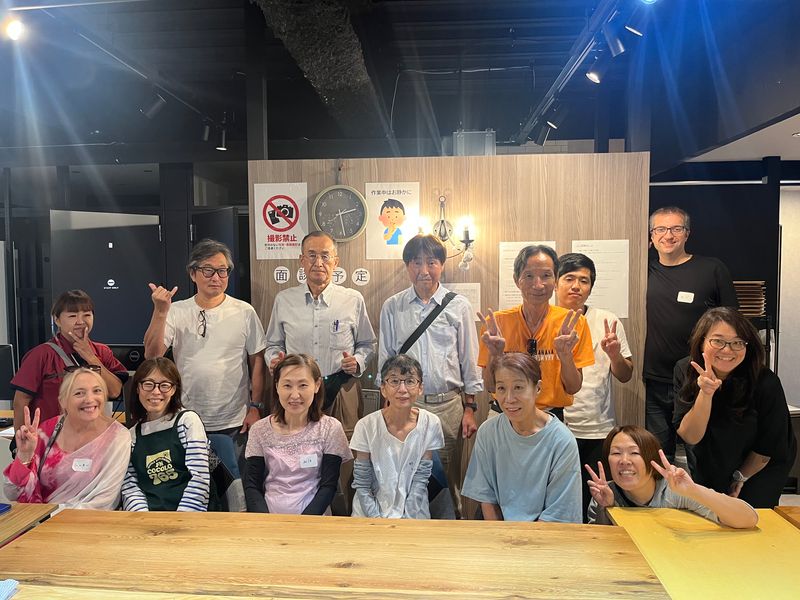
As the partnership continues to grow, Rare Dementia Support Japan will help extend specialist support to more individuals and families, while strengthening research, education and international collaboration between the UK and Japan. It is an important step towards making tailored support for rare dementias available to more people around the world.
RDS Australia
Rare Dementia Support Australia is part of the growing international Rare Dementia Support (RDS) community, bringing specialist information, peer support and connection to people living with rare dementias and their families across Australia.
Launched in 2026 by HammondCare through Hammond Innovations, the service builds on the experience and model developed by Rare Dementia Support at University College London (UCL), adapting it to meet the needs of Australian individuals and families affected by young onset, inherited and atypical dementias. The shared vision is simple: support should not depend on how common a diagnosis is.
Launched at the International Dementia Conference in Sydney, Rare Dementia Support Australia represents an important milestone in expanding access to specialist support beyond the UK. The new service aims to provide reliable information, opportunities to connect with others with similar diagnoses, and practical guidance to help people navigate life after diagnosis. It also seeks to raise awareness of the rare dementias among healthcare professionals and the wider community, ensuring that more people receive the understanding and tailored support they need.
The launch was supported by powerful advocacy from Emma Heming Willis, whose husband Bruce Willis is living with frontotemporal dementia (FTD). Speaking at the conference, she highlighted the importance of ensuring that people with rare dementias are not overlooked, saying: “Support should not depend on how common your diagnosis is.” Her message reflects the values at the heart of the international RDS network and the commitment to improving the lives of everyone affected by these conditions.
As Rare Dementia Support Australia grows, it will strengthen international collaboration between clinicians, researchers and support services, while creating new opportunities for people living with rare dementias to connect, share experiences and access specialist support closer to home. Together with partner organisations around the world, it forms part of a global movement to ensure that no one faces a rare dementia alone.
You can read more on the Rare Dementia Support Australia website.