Our Young Adult Carers Series: Meet Jason
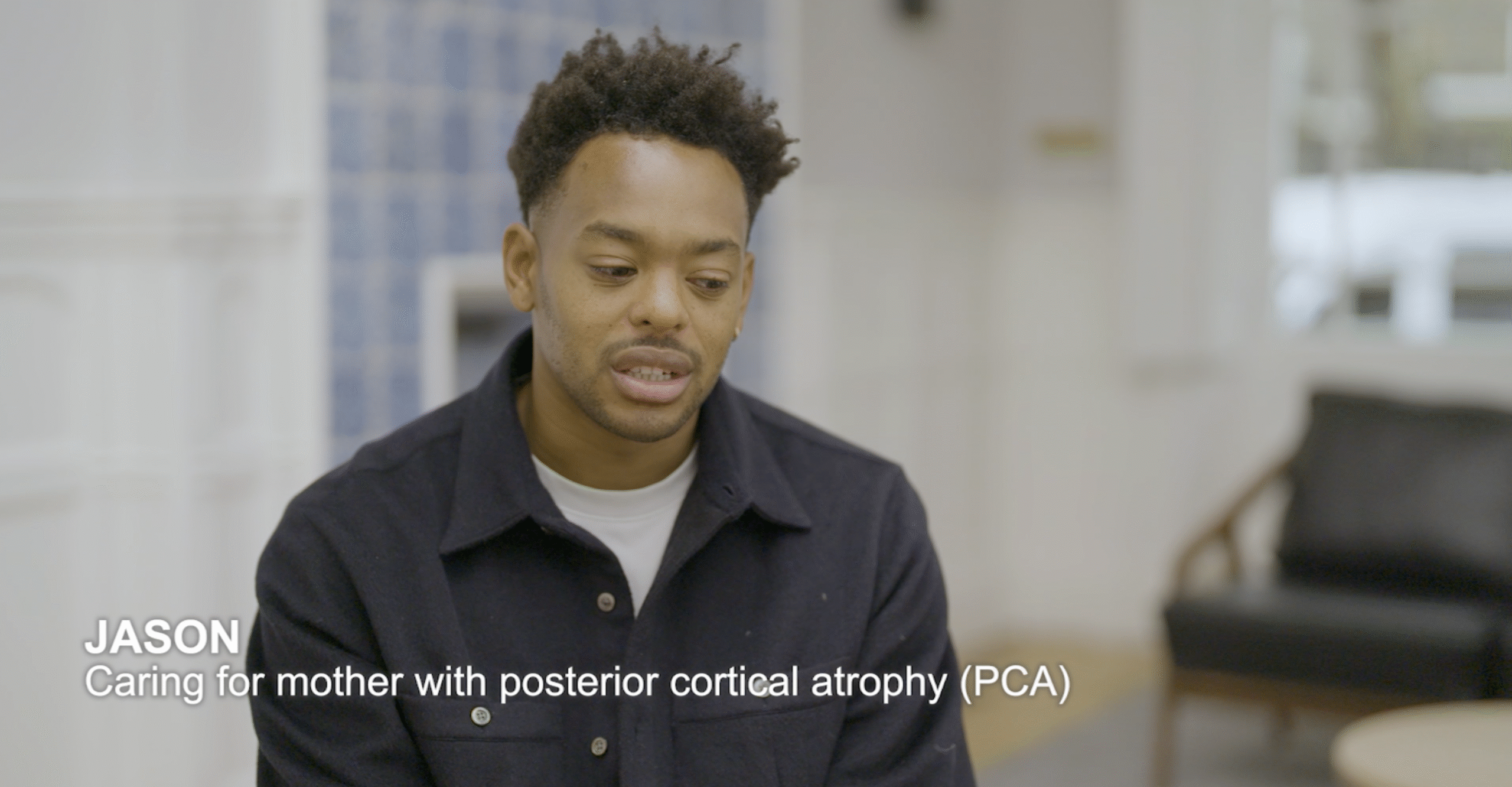
We’re running a new series focusing on young adult carers supporting loved ones living with rare dementias. We’re sharing the real experiences of our members, the challenges they face, and the lessons they’ve learned along the way. Our aim is to raise awareness and offer practical advice for others who may be on a similar journey.
Today, on National Dementia Carers Day, we meet 37-year-old Jason, who has spent the past 5-7 years caring for his mum, Joy, who is living with posterior cortical atrophy (PCA). We’ve taken a lot of the content from our Young Adult Carers video, which you can also watch below, as well as a shorter video of Jason’s story.
When Jason’s mum developed PCA, a rare form of dementia which initially affects visual and spatial processing, his world changed overnight. As an only child, much of the responsibility for her care fell on him.
Jason, an architect from London, said: “Being an only child makes it really challenging, it all falls on you. She’s always been the care provider and all of a sudden that switches, and you become the care provider. You don’t think you have the skill set to deal with that whilst running your own life. You have to live two lives – financially, emotionally – and you have to advocate for someone who can’t advocate for themselves. Every decision comes with additional pressure. That pressure and responsibility increased as mum regressed.”
Before his mum received an official diagnosis, Jason was living through an exhausting daily cycle. He woke at 5am every day, travelled to his mum’s house to make breakfast and lunch, went to work without taking lunch breaks, came home to cook dinner for both of them and care for her, and then went to bed – only to start all over again the next day.
Jason said: “That was the cycle for about 18 months or two years. When we finally got the diagnosis, that’s when stuff started to happen – support started to arrive. It’s like a carrot and a stick: you can’t get help until you have a diagnosis, but at the same time my mum didn’t want to admit anything was wrong. It was a really difficult period to navigate.”
The weight of those years took a toll. Jason added: “You feel yourself breaking down. One thing I did notice, though, is I didn’t realise I had this capability in me, which is a good thing – but I don’t want this to happen to anyone my age, ever.”
Caring for someone with PCA can feel incredibly lonely, especially when friends and acquaintances struggle to understand the reality.
Sharing his experience, Jason said: “You feel quite alone until you meet groups of other people who are suffering similar circumstances. A lot of people kind of ask, but they don’t really want the answer. It’s almost like they’ve ticked the ‘good human’ box, but there’s nothing I can take from that. Or you get a lot of people saying, ‘I want to come and see your mum or spend time with your mum,’ and I’m like, ‘Yeah, come through,’ and they never, never turn up.
“And then six months later, they’ll ask, ‘How’s your mum been?’ and it’s kind of like – she could be dead by now, you wouldn’t know. They don’t see the blood and guts that goes into all of this. They’ll happily walk with you in the park when your mum’s there, but they don’t see what happens behind closed doors. You kind of feel a bit alone and isolated, but again, it’s taught me that I have these skills, and I’m capable of a lot more than I thought.”

Jason and his mum started to cope better after meeting other families on similar journeys and receiving support from St George’s Young Onset Support Group and Rare Dementia Support (RDS). Jason also began making time for himself again.Jason wants other young carers to know that they are stronger than they realise and that support is out there.
He said “You’re a lot stronger than you think you are, and there’s a lot of help online that you can reach out for. Use the people around you – your GP, professionals, whoever – because you never know who they might know. Don’t be afraid to talk about it. Getting mental health help is really important. And keep doing the activities that make you happy. I love the gym and sport, but I gave that up for three or four years and I was miserable. Once I started playing again, I realised you can’t fill another cup from an empty one. You need to look after yourself so that you can look after someone else.”
Jason decided to take part in the new film by Rare Dementia Support to raise awareness of PCA, being a young adult carer, and the work the organisation does after supporting him. His mum’s PCA has progressed and she is now in a care home where Jason visits her regularly.
He said: “I wanted to take part because I wanted to reach people with this lived experience and highlight that it shouldn’t be undertaken alone. Help is available but knowing where to find it can be tough.
“I want to help shape how we deal with dementia and support RDS in any way that I can as they have provided a community for my mum and I that I had no idea existed.”
If you’re a young adult carer, or facing a rare dementia diagnosis in your family, you can reach out for support at contact@raredementiasupport.org