Sarah’s story: Receiving positive test results for familial frontotemporal dementia (fFTD)
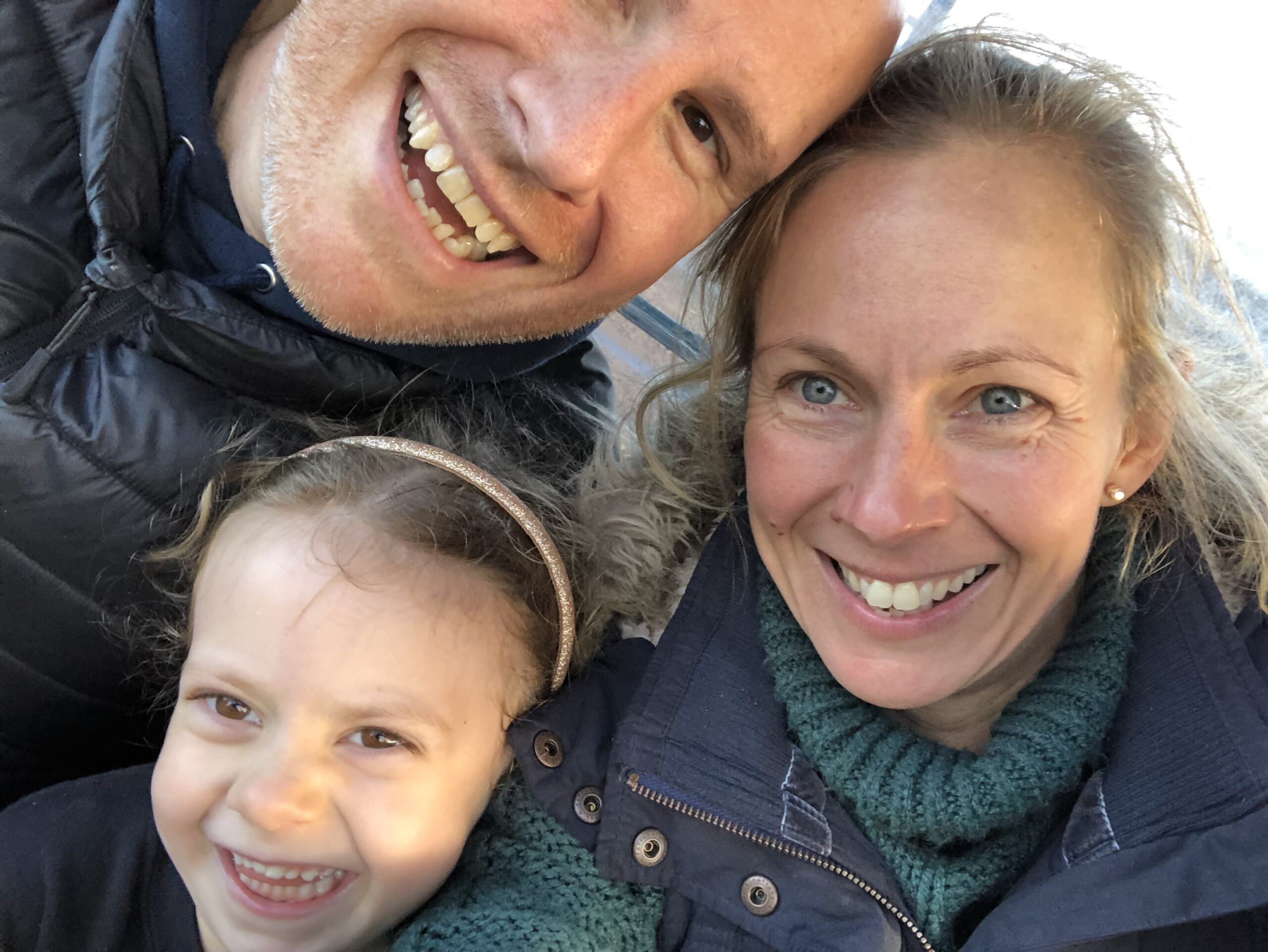
This World FTD Awareness Week, we’re sharing Sarah Dolling’s incredible story.
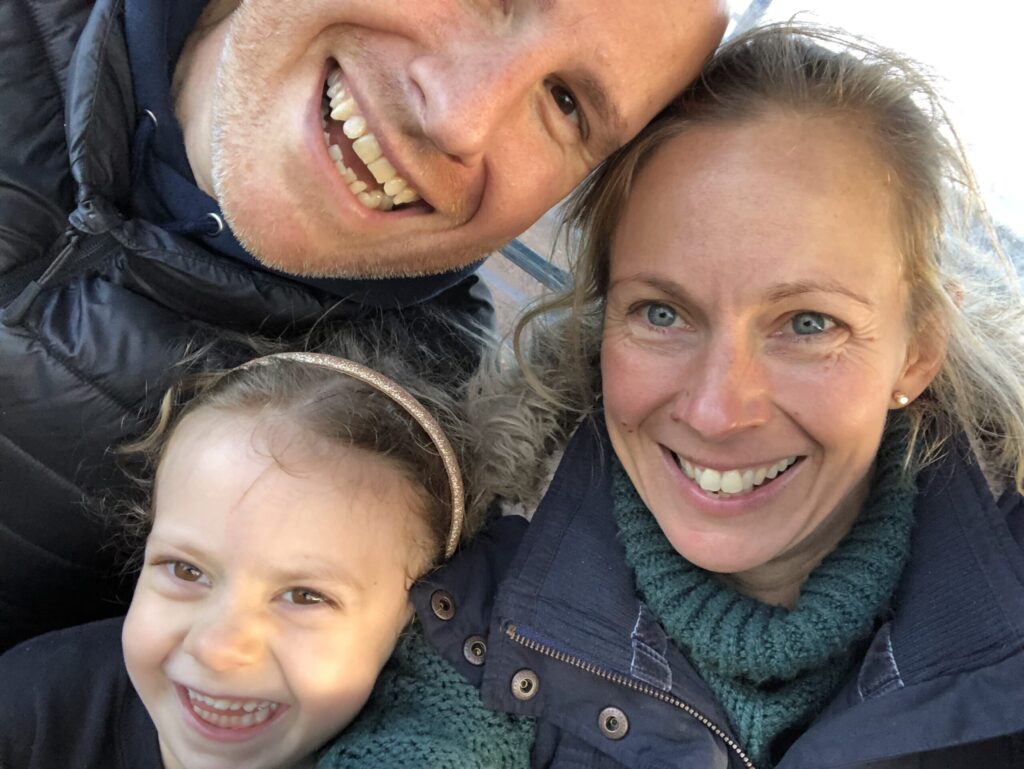
Familial frontotemporal dementia (FTD) has cast a long shadow over Sarah’s family. “My dad, nan, uncle and aunt all had or have FTD,” she explains. “After Dad’s diagnosis, my brother and I were offered the chance to get tested for the MAPT gene mutation. We found out our test results together, ten years ago. Thankfully, my baby brother was cleared, but unfortunately I wasn’t.”
The result meant that, like her father, 43-year-old Sarah will one day develop FTD. “Obviously not the best news you can get in a day,” she reflects. “It has taken me years to get to this point and not allow myself to dwell on what could be coming my way.”
Sarah, who works as an associate assistant principal in a secondary school, recalls how her father’s diagnosis was delayed for nearly a decade. “He was incorrectly diagnosed with depression on more than one occasion, with his symptoms starting in his 40s. If it wasn’t for the tenacity and conviction of my stepmum literally refusing to leave the doctor’s surgery one day, I’ve no idea how long it would have gone on.”
Her uncle’s experience was very different. “Once quirky and flamboyant, he became erratic and was first misdiagnosed with manic bipolar disorder before finally getting his official FTD diagnosis at the age of 53. For him, the symptoms progressed quite quickly.”
“Even within my own family,” Sarah says, “I’ve seen how different it is for everyone, the way the pain has changed, the speed at which symptoms manifest.”
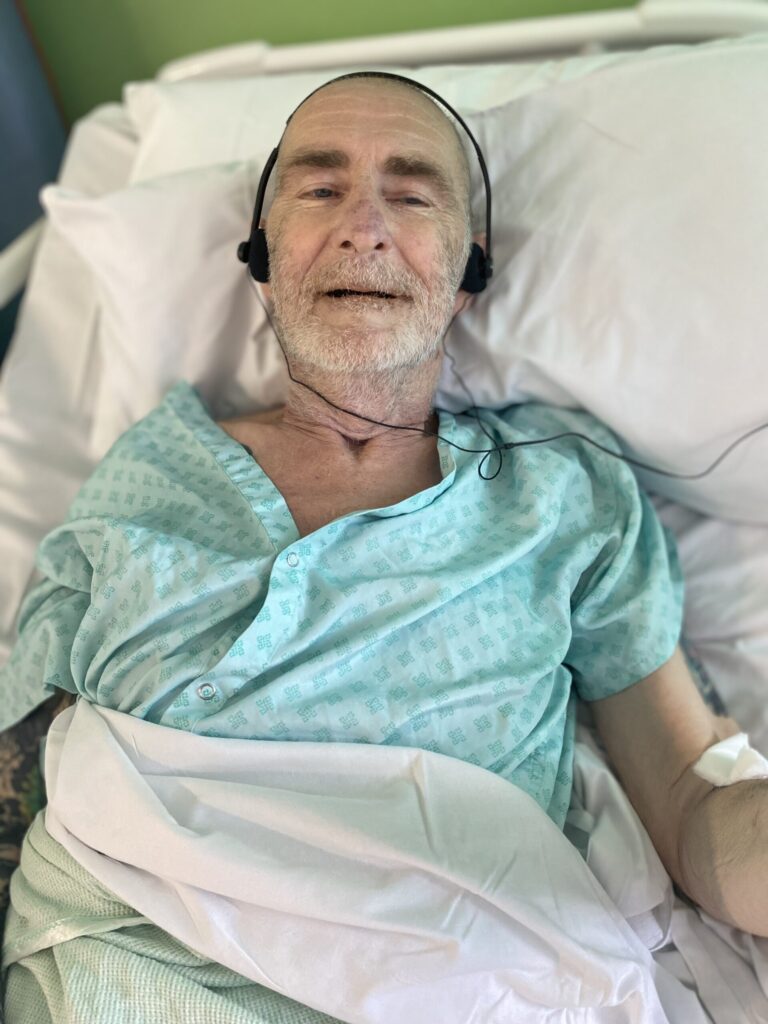
David, Sarah’s husband, admits it took time for him to absorb the reality. “Sarah sat me down a few times and, to my regret, although I was nodding in the right places, the words were just bouncing off. About a week before the genetic testing, I panicked and opened up my laptop. Six hours later I was a sobbing mess when I really understood what was going on.”
When Sarah called with her results, David described the moment as if “somebody turned up gravity. I sunk into my seat and could barely hold the steering wheel.”
In the days that followed, they faced the news together. “We held each other, we ignored each other, we cried, I made inappropriate jokes, we laughed,” David says. “Ultimately, we were processing.”
The couple got support from the team at Rare Dementia Support. Sarah said: “RDS and the team have been amazing and my go to for anything and everything!” Sarah also began taking part in the GenFi research study, an initiative to understand more about familial frontotemporal dementia.
Over time, the couple began to reframe their future. David remembers asking Sarah at what age she would accept symptoms beginning. “Her answer surprised me in its rapidness. ‘71,’ she said. Something changed in the air at that moment.”
Sarah adds: “It was liberating to think of a future that wasn’t just about FTD but included it. That’s how Project 71 was born.”
Together, they began to look at every aspect of their lives– family (including their nine-year-old daughter Isla), friends, their marriage, their home, finances, aspirations– and created what David describes as “a framework to navigate what will clearly be difficult times.”
Speaking openly about genetic risk hasn’t always been easy. “In the early years, I wasn’t ready to go public,” Sarah says. “I worried about people’s opinions of me changing, and of course the big pity party, which I wasn’t ready for. But after Dad passed away last year, it gave me the push I needed and we launched Project 71 earlier this year.”
Through Project 71, Sarah and David now share their journey with the aim of raising awareness and supporting others. As Sarah explains:
“Getting the results of the genetic test in so many ways has been a blessing in disguise. It has made me appreciate the little things and to really focus on what is important, my loved ones being at the top of that list. I know this may not be the case for everyone and it has taken me years to get to this point and not allow myself to dwell on what could be coming my way. We just hope the more we talk about this cruel disease and the more we share, the more people will be able to access the support and care they need and deserve.”
For Sarah, the motivation is simple: “Not everyone has a Zoe,” she says, referring to her stepmum’s determination in securing her dad’s diagnosis. “If the work we’re doing helps one family or one person get early support, then I can take what we’re doing as a win, that we’re doing the right thing.”
You can watch Sarah and David’s full talk at the Rare Dementia Support Familial Frontotemporal Dementia Seminar 2025.
Project 71 is an awareness initiative founded by Sarah and David following Sarah’s genetic diagnosis of FTD. Its mission is to raise awareness, support families, and show that there can still be light in the darkest situations.
You can follow Sarah and David’s journey on their Instagram and donate to Sarah’s JustGiving fundraising page.