Something Positive Out of Tragedy

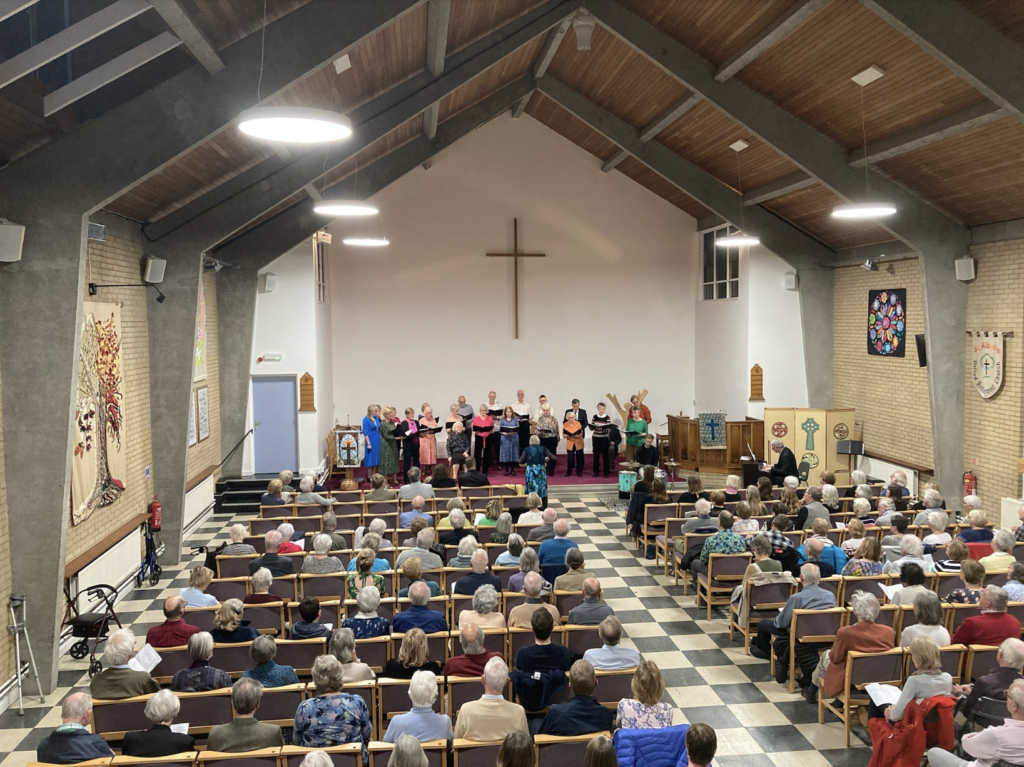
By the time Sian Hackett’s husband Chris was diagnosed with Lewy Body dementia in 2020, alarm bells had been ringing for several years, during which they had adapted to ongoing changes in cognition, the frequent experience of hallucinations and a forced early retirement. They were shocked at the lack of support and guidance available from local health professionals, following the diagnosis, and were relieved to come across and access the Rare Dementia Support services.
Everybody who is forced to embrace a rare dementia diagnosis has many adjustments to make, on multiple and various levels, as they come to terms with not only the practical impact of the diagnosis and symptoms, but also the emotional and psychological impact too.
Whilst much that is ‘lost’ or ‘changed’ relates to the more obvious symptoms of the disease, there are numerous other related losses that are not so clearly apparent, but just as deeply impactful. Sian describes several losses which have made a big impact on them as a family, including the loss of access to the outdoors and the loss of storytelling and humour, and the loss of Chris’s ability to drive.
Described by Sian in this story, this is on one level a practical and functional loss which impacts independence and mobility. But it also carries implications for losses on many other levels. As a shared pastime or hobby, it can strip couples, families and friends of a shared activity in which they find identity, purpose and meaning. As a means of getting to visit family, friends and places of interest, it can mean that time spent together with the people we would like, or in places we like to visit is reduced or even completely erased. Our sense of identity, purpose and control can feel diminished or removed in ways that are even more challenging to adapt to than the functional loss they relate to. We sometimes refer to these types of losses as secondary losses, and in some ways they can be described as ‘ambiguous or living losses’. They aren’t necessarily as well recognised or supported by the people around us, but can be just as significant and life changing. Find out more about Living Losses here.
These losses can be experienced by everybody who knows or cares for or about the person living with dementia, as well as the person living with the diagnosis themself.
It is important to identify and name these losses, as part of the process of grieving them, and living alongside them. Finding ways to live alongside and ‘balance’ the losses can include adopting a wide range of strategies that we know empower us and make a positive impact on our wellbeing. These will be different for different people, and in the story below, Sian describes how Olga, her 98 year old mother organized a fund raising concert as a way of ‘helping’ a situation which was otherwise outside of her ability to change. She also describes the sense of fulfilment and pleasure that everyone who participated in and attended the event gained.
As well as celebrating all that her son-in-law meant to her, Olga’s efforts raised much appreciated funds for Rare Dementia Support. Thank you Olga!
We usually think that it is the person diagnosed with dementia who faces loss but as most of you reading this understand all too well, loss affects everyone in the family. Our children, David & Sarah and their partners, Lucy and Paul miss their dad witnessing their achievements & new jobs. They miss having discussions on history and sport and also his sense of humour. Our grand-children, Ethan & Cara have lost their story-reading, football playing Papa and worry about him and me. Our children live 150 miles apart from each other and from us so they cannot be of much practical help. They find that hard.
One of my biggest losses has been the outdoor world. Chris was a fantastic driver and map-reader and he drove me to the most remote areas of the country and took me on spectacular walks that he devised himself. There’s hardly anywhere in England and Wales he didn’t take me too. More of Scotland was next.
My 98 year old mother, Olga, who has known Chris for 51 years also felt a loss. She felt frustrated that she was unable to help him or help us more generally. Last October she suddenly announced that she was going to organise a concert to raise awareness of and money for research into Lewy Body Dementia. She used the three most important things in her life to make this happen: family, church and music. The family and the church immediately rallied around her, all too keen to be part of something so positive.
Olga cannot see well now but she, asked, phoned and wrote to those who she wanted to take part. Everyone she asked said yes as they too were glad of the chance to help in a practical way. The family assumed roles to suit their talents. My sister produced the programme, my brother would be the compère. Our son and daughter-in-law were to sing and play, our daughter and son-in-law would be in charge of fund raising and I was to decide the programme order, trouble-shoot, organise rehearsal times, sing and probably most important of all give a talk to raise awareness of Lewy Body Dementia.

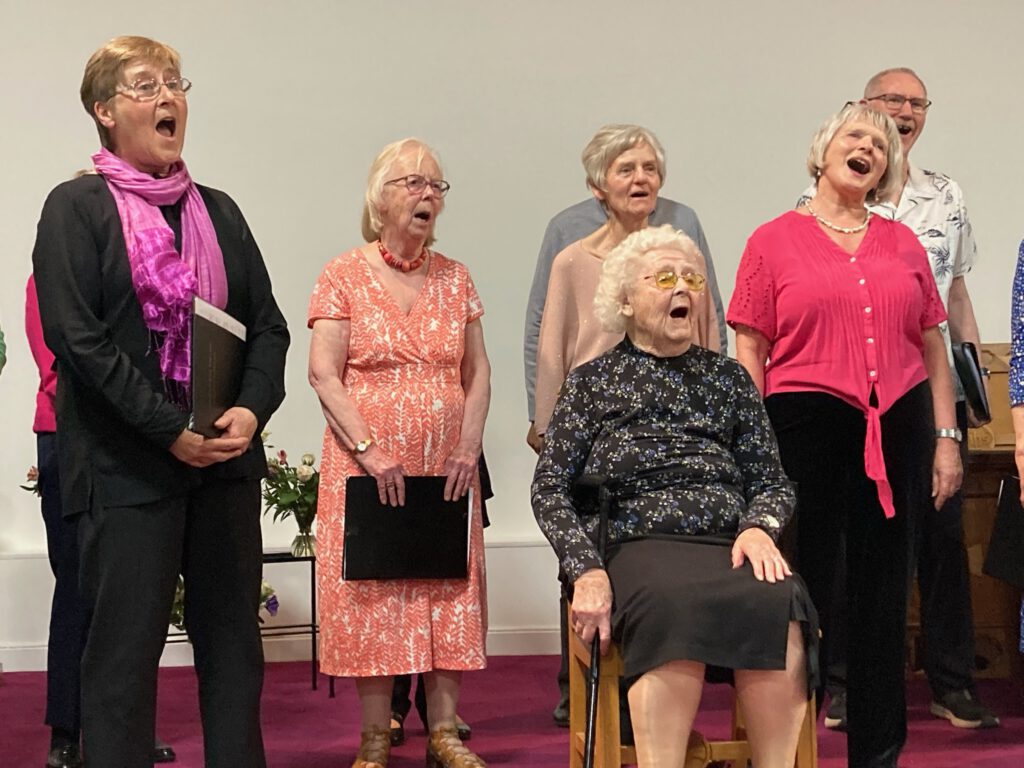


People performed and attended out of love for either my mother, Chris or me. The church community printed programmes, performed, provided refreshments, ran the sound system and recorded the concert. We did not have one penny of expenses.
The concert was joyous. The audience came to our concert out of love or duty and they were amazed at the quality of the performances. It was a good job we didn’t advertise as we had nearly 300 in the audience and at one point they were queuing to get in.
My daughter, Sarah & her husband Paul had set up a just giving page for friends who couldn’t attend the concert. She brought a contactless card machine and used the church’s gift aid envelopes for cash donations. We were astonished and thrilled to reach a total of over £6000!
The family was walking on air for at least two weeks! I can’t imagine how hard the last few years would have been without the support of UCL and the RDS support groups and seminar days. It’s been hard enough with them! It has been so lovely to give them something in return.