The Last Laugh: Dementia and Happiness
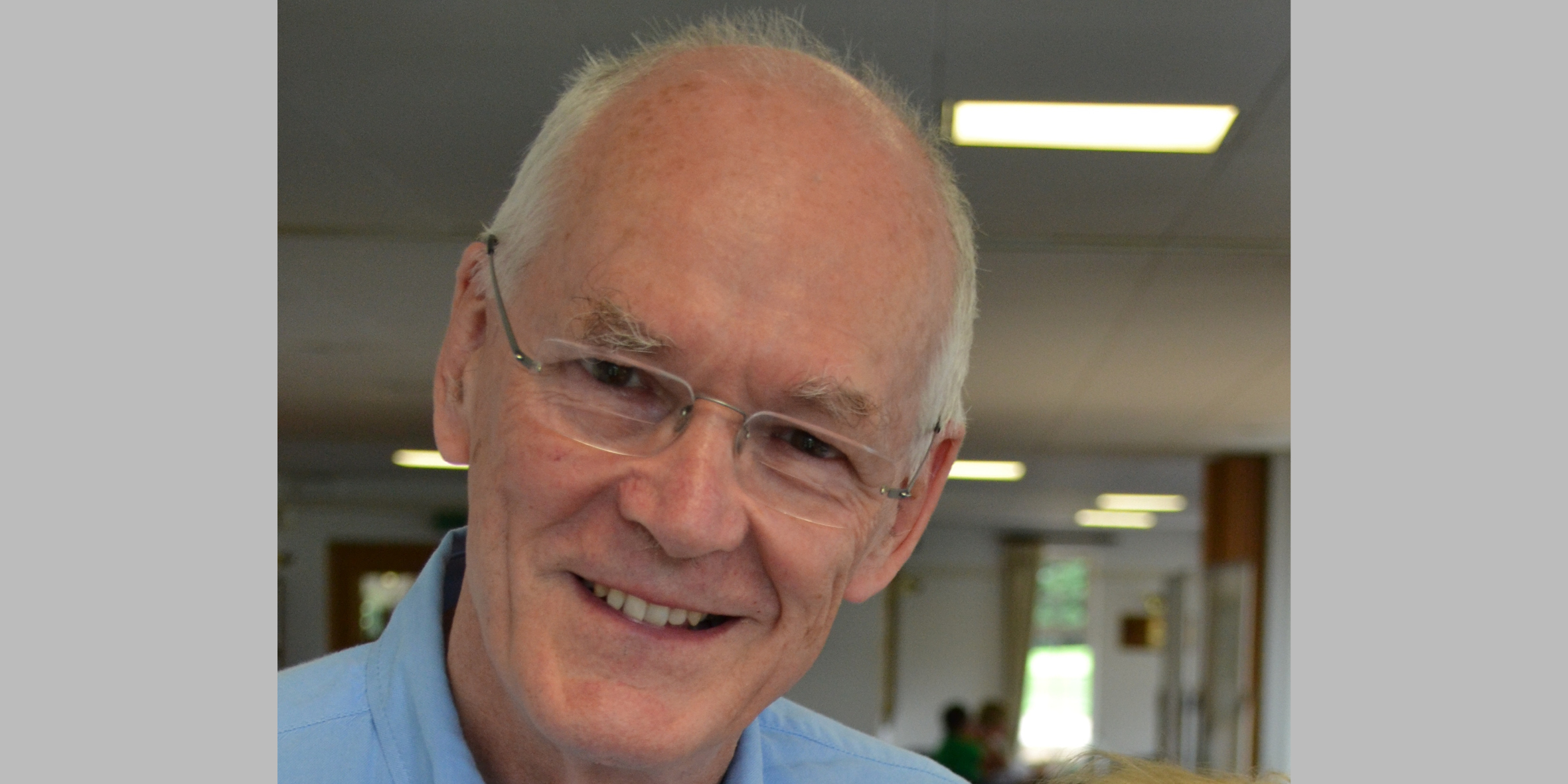
Alan was diagnosed with dementia in 2017, and subsequently Dementia with Lewy Bodies. This is Alan’s story.
Please note: We know it can be invaluable to read other members’ experiences, but please bear in mind while reading the below that every experience of PCA will be different. For example, symptoms which arise very severely for one person may not be experienced at all by another, and access to services and resources can vary greatly according to location and circumstance. If you have any concerns or questions about any of the issues raised below and how these may relate to you or your loved ones, please do contact us at contact@localhost.
About three years ago I was diagnosed with dementia. I was beginning to forget a lot, so I went to my GP who referred me to the hospital in North London where I live. I did a lot of tests, and in February 2017 I was diagnosed with Alzheimer’s Disease, the most common form of dementia. I was just seventy-four. I remember afterwards, sitting with my wife Mary and thinking how odd it all was. I didn’t feel ill. I didn’t feel as if I ‘had’ anything.
At that time, I knew very little about dementia. All I could think of was disability, lolling heads etc. seen on television. I have written this story to record my pleasure and surprise at finding how different things could be.
A few months later, my GP noticed my hands trembling, and referred me to the National Hospital for Neurology and Neurosurgery in Queen Square, Bloomsbury. There the consultant asked, among other things, ‘How is your sense of smell?’ I said I hadn’t smelt anything much since I was about thirty. ‘Ah’, he said, ‘that is interesting.’ In the summer of 2017, my diagnosis was changed from Alzheimer’s to Dementia with Lewy Bodies.
Dementia with Lewy Bodies occurs when tiny clumps of protein develop inside brain cells, causing them to malfunction or die. So this particular dementia is a mixture: I get confused and forget a lot (like Alzheimer’s) and I shake and feel unsteady on my feet (like Parkinson’s).
My memories of the next couple of years are confused. (Mary’s are more reliable.) I remember thinking about dementia’s funny twists of language: in clinical terms, dementia is a ‘progressive’ disease, which means it goes on getting worse. Its so-called progress is uncertain, but it doesn’t turn back. I will never get better. (This sounds either bitter or brave, but it is not meant to be either.)
I can remember the social awkwardness of having a serious disease which isn’t obvious in the early stages. People don’t know how to react. Sometimes they congratulate you on ‘doing so well’ when you are just sliding imperceptibly downhill. Sometimes they are sceptical; ‘Oh, I forget things too. You are just getting old.’ Which is true.
In the summer of 2018, I began to panic. I was scared of the outside world and behaving oddly. I made plans to clear all my files out of my office, as if my life was almost over. I can’t remember much about it now; Mary remembers more. The doctors at Queen Square diagnosed anxiety, quite common in people with Lewy Bodies. The professor of neuropsychiatry prescribed an anti-depressant called Duloxetin, and told me to come back in a few months and say how I was feeling. When I came back I said I felt much better. She is not a little girl, but she jumped up and clapped her hands as if she was: ‘Wonderful! Wonderful!’ I got the impression that prescribing anti-depressants is a rather hit-and-miss affair, but on this occasion the Professor had scored a palpable hit. Since then I have slowly come to feel that I am standing in a sunlit landscape of happiness: at peace; a bit muddled, but happy.
I have not always been happy. I got married in 1968 and my wife Jane and I had two children, Sarah and Kate, who are now talented, capable parents and professional women. Those were happy years. In 1978 Jane was diagnosed with breast cancer. She died in 1985, aged thirty-eight. If it were nowadays, perhaps she would be still alive. By the early nineties, I was living by myself in North London, working freelance, and in therapy. Those were not happy years.
But now, much of that has changed. Jane is a constant and a kindly presence in our lives. I live with my new wife Mary near Alexandra Park, with its views over much of London. I used to walk across the park and back in the afternoon, a distance of about two miles. Now I can’t manage it by myself, so either Sarah or Kate, both of whom live near the Park, come with me and we find a bench and talk. It is a blessing.
And my life is happy, even hilarious. I talk to myself – little phrases, advertising jingles, bits of poetry, bits of Monty Python – I think I have always done this but recently it’s got a bit more loony. I was brought up a Catholic and the other day I woke up with the phrase ‘Dominus tecum’ in my head – what the priest used to say in Catholic churches when giving out Communion. Only it had got muddled up in my head with ‘Cadbury’s take ‘em and they cover them with chocolate’.
I work as a writer, and words give me so much pleasure. My hands shake, so I can’t write clearly and my typing is rubbish. So I have bought some software called ‘Dragon’. I say what I want to write into a microphone and it appears on the screen without me touching the keyboard. At least, that is the theory. In 1940 my father wrote to my mother: ‘I think you look damn fine’, But when I copied his letter using the Dragon, it said ‘I think you look terrifying.’ What can you do? It’s infuriating, but it is also somehow crazily endearing. I bow down, kiss the keyboard, and wipe out the words.
It probably sounds as if I live in a state of drug-induced euphoria, and in a sense I do. But I also want to say that I am at peace. My brain may be under constant siege from angry Lewy Bodies, but I can carry on an intelligent conversation as long as it doesn’t have to do with Brexit or getting the boiler mended.
Of course, I know that it cannot last. I am, I think, in the early stages of dementia, and there is worse to come. I laugh a lot, but I don’t think I will have the last laugh.
I fell in love with Mary in 2008. We are an odd couple. I am posh, privately and foolishly educated, with a voice that Mary says sounds like Pathé News. She is the child of a happy Catholic working-class family in Limerick. She moved to London and married a man who turned out to be violent and abusive, and she stayed with him for eighteen years, though she doesn’t know why. Their three children, Carley, Darren and Lyndsey, are all flourishing.
We married in 2011 and when I think of that, I am full of wonder. It was, and is, so quiet, so ordinary, so deep. The landscape in which I live is not a drug-induced wonderland, though the medication (to use a politer word) has a lot to do with it. It has roots. It grows out of the care of my GP, my therapist and the doctors and nurses at Queen Square; out of the love and support of my friends and family, especially Sarah and Kate and their children; and, above all, out of the deep, strange and abiding love of the girl from Limerick, who has so changed my life.

We would like to thank Alan very much for sharing his story.